Anthropologie Corporate Gifts? A Cost Controller's 3 Scenarios for Outlet Finds, Planners, and Custom Print
Let me save you the same mistake I made early in my procurement career. I assumed an Anthropologie-inspired corporate gift budget was a straight choice between pretty retail items and expensive custom manufacturing. It isn't. The real cost driver is matching the order size to the sourcing and production method. Just as importantly, the best answer changes once the quantity changes.
I'm a procurement manager at a 180-person B2B firm. I handle about $38,000 a year in client and employee gifts, and I've logged more than 290 merchandise orders in our cost system since 2019. I don't say that to sound like a hero. I say it because my advice is based on actual invoices, not a brochure. And the honest conclusion is this: there is no single best Anthropologie-style corporate gift. A 25-piece executive gift list is a different project from a 600-person planner order. So here are the three scenarios I actually use.
Start here: find your scenario
Before you type 'anthropologie website' or search for 'anthropologie home outlet texas', answer two questions. First, does every gift need your logo printed directly on the product? Second, what quantity are you really committing to? If the quantity is below 50, you're in Scenario 1. If it's roughly 100 to 250 and light branding is acceptable, Scenario 2. If it's more than 300 with strict brand consistency, Scenario 3.
The in-between zone—80 branded items with a tight deadline—is where the budget dies.
Scenario 1: 10–50 VIP gifts, no printed logo
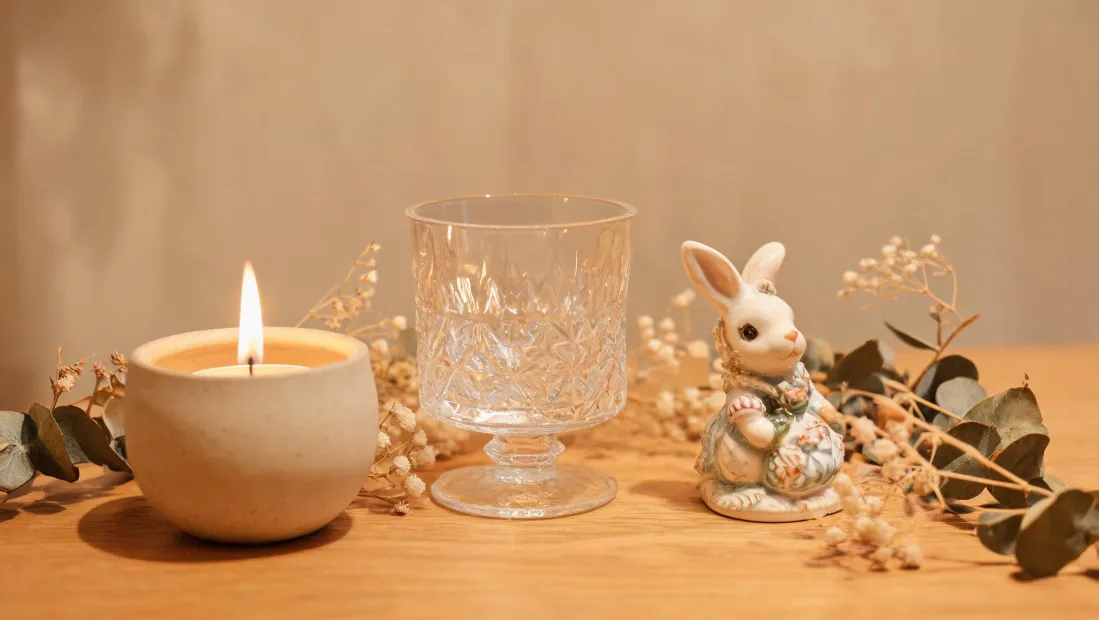
Use this when the recipient is an executive, a long-term client, or someone you don't want to hand a branded plastic item. For this volume, I buy finished goods from the Anthropologie website. A candle, a vase, a small decorative object, or a desk photo frame works because the aesthetic carries the gift. There is no setup fee, no color proof, and no leftover inventory.
If you're near Texas, keep a phrase like 'anthropologie home outlet texas' in your sourcing file. My experience is that outlet stock is heavy on seasonal home goods and returns, so it's excellent for 10 to 20 distinctive pieces but unreliable for anything bigger. Still, when it works, it works well.
To make the gift feel personal without adding a print vendor, put a photo in a physical frame. If you search 'how to add frame to photo in canva', the answer is straightforward: upload the photo, click Elements, choose Frames, pick a shape, and drag the photo inside. You can also add a border before exporting. Print it at 4 x 6 inches and place it into an Anthropologie-style frame. This is a tiny cost that made a $50 vase feel like we had studied the client's taste.
Why not customize at this volume? Because setup fees destroy the total cost. A $25–$75 Pantone color setup is fine for a big print run, but on twenty-five units it adds more than a dollar per piece before the item itself.
Scenario 2: 100–250 useful, lightly branded gifts—the planner problem
A planner is one of the safest corporate gifts I've found. Everyone with a desk needs one, and a planner stays in view all year. The more intentional the cover, the harder it is to ignore. But there's a trap: ordering planners from a retail site usually gets you a handful, not two hundred, and the per-unit price often jumps at that awkward size.
At 100–250 units, I buy blank planners from a wholesaler and customize the wrapper rather than the product itself. I'm not a graphic designer, so I won't pretend to teach typography. What I can tell you from a procurement perspective is the workflow: design a belly band in Canva, print it on heavy paper, and use a cutting machine to cut it cleanly.
The band is basically a long strip that wraps around the closed planner. It includes the recipient's name and our logo. I print it on 100 lb text paper, which is about 150 gsm. That's heavy enough to hold its shape but light enough to bend around the planner cover. Then I use a desktop cutting machine to cut the outer shape and score the fold lines. If you've never used one, it's simpler than it sounds, and it beats paying a die-cutting setup fee for a run of 130 pieces.
Here's the total cost from a batch of 180 planners I ran in November 2023: blank planner, $9.45 each. Paper, ink, and blade wear added about $0.57 each. Labor came to roughly four minutes per planner at $24 per hour, or $1.60 each. Total was about $11.62 per unit—$2,092 for the batch. A local promo vendor quoted $16.80 each, so in-house production saved us close to $930.
But there's a catch that cost me a later batch. I tried to shortcut the process by cutting adhesive vinyl letters and pressing them directly onto planner covers. The sample looked great. The reality was peeling letters. After we shipped 120 planners, multiple clients sent photos of the covers. The redo cost about $1,200. The lesson: a cutting machine is excellent for paper and cardstock, but it's not a replacement for commercial printing on textured covers.
Scenario 3: 300+ identical, brand-consistent items
Once you need more than 300 matching items, or when you'll reorder the same design next quarter, this is no longer a DIY or retail project. The right move is a custom print or branded-merchandise vendor. The Anthropologie website can still help you build a visual style reference, but the supply chain needs to be repeatable.
When I ordered 600 planners with our logo, my first request wasn't for a price. It was for the official color standard. I'm not a color scientist, but I know enough to ask for Pantone. Our corporate blue is Pantone 286 C. In CMYK that's roughly 100% cyan, 66% magenta, 0% yellow, and 2% black, but the printed result varies by paper and press calibration. The reference I use is the Pantone Color Bridge guide, and the tolerance I ask for is Delta E less than 2.
The other thing I check is logo resolution. Standard commercial print is 300 DPI at final size. If the supplier has a logo file that's 3,000 by 2,000 pixels, the maximum printed width at 300 DPI is 3,000 divided by 300, or 10 inches. Anything wider looks fuzzy. No amount of online sharpening can fix that after the fact.
Also understand the hidden line items. Custom Pantone color can add $25–$75 per color, setup fees vary, and rush production can run 50–100% above standard pricing. When a quote says 'free setup', I look for a higher per-unit price or a minimum charge hiding somewhere else. The question everyone asks is: what's your best price? The better question is: what does that price include?
How to tell which one you are, without overthinking
If you have 10–50 gifts and a logo is not essential, Scenario 1 wins. Don't buy a cutting machine for this. Use the anthropologie website, maybe the anthropologie home outlet texas if you're nearby, and add a Canva-framed photo to personalize it.
If you have 100–250 items and someone can spend two focused days on assembly, Scenario 2 can beat vendor pricing by 20–45%. But that only works if the labor actually exists. If the project would sit for a week and then get ordered in a panic, outsource it.
If you have more than 300 items, or if the logo must be the exact same Pantone color in every batch, go to a print vendor and pay for proper prepress. Don't let an outlet find or a craft shortcut become your brand strategy.
What about the 80-unit order with a two-week deadline? That's the no-man's-land I'd avoid. It's too many for handcrafted consistency and too few to spread setup cost. My honest advice: lower the quantity to 50, move the deadline to three weeks, or combine the order with another roll-out so the setup cost becomes reasonable.
I can't tell you the exact planner brand or vendor to use, because my experience is based on about 290 U.S. orders in the 20-to-2,000 unit range. If you're sourcing internationally or doing one-off luxury hampers, those numbers will shift. But the core rule doesn't: the most expensive route is rarely the luxury vendor. It's the wrong method for your quantity, repeated twice because the first attempt failed.

Elise Laurent
Elise Laurent is a crystal and decorative glass quality analyst covering crystal figurines, vases, ornaments, suncatchers, and gift glassware. She examines ISO 6486-1 where food-contact glass dinnerware applies, then uses polarized strain inspection, dimensional checks, surface-defect grading, and refractive clarity to compare decorative pieces outside that scope. Her work helps sourcing teams choose materials, finishing routes, and protective packaging without confusing visual brilliance with verified durability.