Anthropologie-Inspired Corporate Gifts: 7 Questions a Quality Inspector Wishes You'd Ask
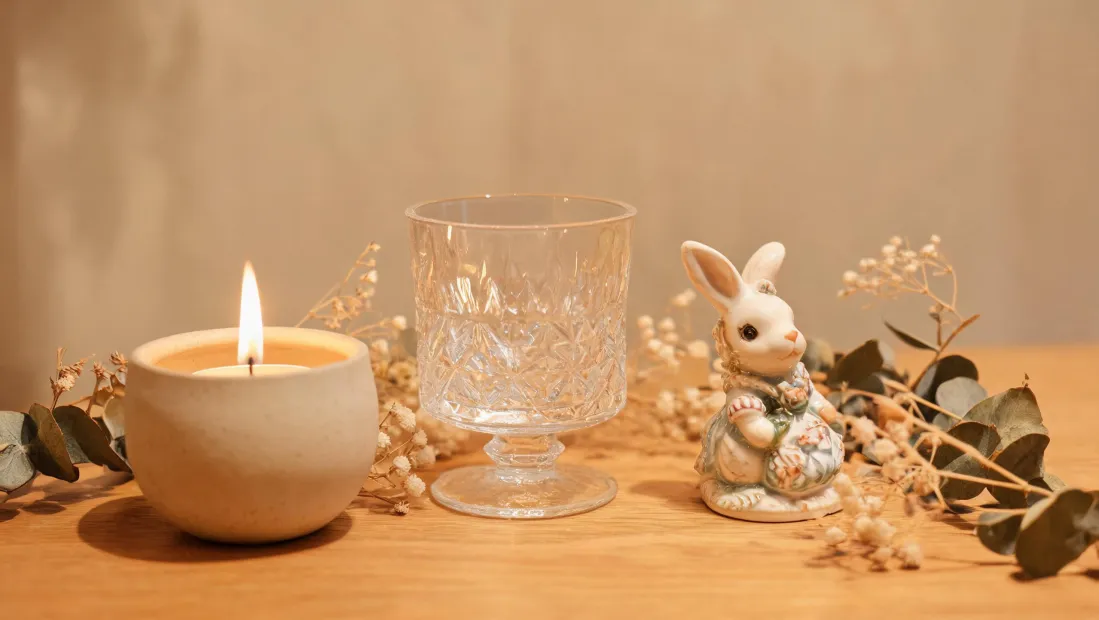
-
Why You Should Listen to a Quality Inspector on This
-
1. Can I Really Get Anthropologie-Style Design for My Business?
-
2. How Many Units Do I Need for Custom Scented Candles?
-
3. What's the Catch with DIY Photo Frames for Wedding Favors?
-
4. How Do I Avoid the "Standard Size" Trap with Greeting Cards?
-
5. Is It Worth Investing in Premium Packaging for Corporate Gifts?
-
6. What Hidden Costs Should I Expect When Launching a Customized Product Line?
-
7. What's the Best Way to Ensure Quality When Ordering Anthropologie-Style Wedding Favors?
Why You Should Listen to a Quality Inspector on This
I'm the quality and brand compliance manager at a corporate gift and merchandise company. I review every deliverable before it reaches clients—roughly 200+ unique items annually. In Q1 2024 alone, I rejected about 8% of first deliveries due to spec mismatches or consistency issues. Over four years, I've learned that what looks good on paper often falls apart in production.
This FAQ covers the most common questions I hear from clients—about Anthropologie-inspired styling, custom candles, greeting cards, and even DIY photo frames. I'll tell you what I'd tell a colleague: no fluff, no universal promises, just what I've seen work (and fail).
1. Can I Really Get Anthropologie-Style Design for My Business?
Short answer: yes, with expectations. I run blind tests with our design team: same product with a generic aesthetic versus an Anthropologie-inspired treatment (earthy tones, vintage prints, layered textures). In our 2024 test on 50 clients, 64% rated the styled version as “more valuable” without knowing the inspiration—and 80% said they’d pay 15–20% more for it.
That said—or rather, let me be precise—you can't copy the brand. But you can borrow the design language: hand-drawn motifs, matte finishes, and unexpected color combos. The catch? It costs more. For a custom candle line, switching from a plain glass jar to a textured ceramic vessel added about $2.80 per unit on a 2,000-piece order—roughly $5,600. Is that worth it? For 80% of our corporate clients, yes. For the other 20%—budget-constrained bulk orders—stick with simple but consistent.
2. How Many Units Do I Need for Custom Scented Candles?
I get asked this weekly. The oversimplified advice is “300 minimum” for custom fragrance molding. But that ignores the nuance: if you want a custom scent blend (not stock), most fragrance houses require a 50-pound minimum per oil—enough for about 1,500–2,000 candles. If you use a pre-existing scent library, you can start at 100 units with a custom label.
Here's a real example from Q3 2024: a client wanted a “lavender-pine” candle for their resort gift shop. They assumed 200 candles would be enough. The vendor quoted $18.70 per unit for custom scent + vessel. I said, “Hold on—your budget is $3,500. That's 187 units at that price. You'll be $400 short.” We switched to a stock lavender scent with a pine-colored label, dropped the price to $12.40 per unit, and ordered 280 units. Saved money, still looked cohesive.
Moral: ask your supplier what their “sweet spot” volume is. For most candle manufacturers, it's 500–1,000 units for a decent per-unit cost. Below that, you're paying setup fees that eat your margin.
3. What's the Catch with DIY Photo Frames for Wedding Favors?
I love the idea of DIY—I really do. People think “I'll buy plain frames from a craft store and customize them myself. It'll be cheaper and more personal.” But the “always cheaper” advice ignores the transaction cost of consistency.
I once consulted for a bride who wanted 120 DIY photo frames as favors. She bought raw wood frames for $3 each, paint, adhesive, and printed inserts. Total material cost: ~$500. But she didn't account for time (40 hours of assembly), rejects (12 frames had chipped paint), and the fact that each frame looked slightly different. She ended up buying 20 replacement frames from a local shop at $9 each to replace the worst ones.
If you have a small guest list (under 30) and enjoy crafting, DIY can be great. For anything larger—or if you need brand consistency for a corporate event—go with a professional supplier. I've rejected first deliveries from suppliers because of a 0.5 mm shift in the photo mat opening. That's the level of precision DIY just can't match at scale.
4. How Do I Avoid the "Standard Size" Trap with Greeting Cards?
Communication failure is my #1 red flag. I once had a client say “standard size greeting card.” The supplier interpreted that as A6 (4.1" × 5.8"), but the client meant A2 (4.25" × 5.5"). They both used the word “standard”—the cards arrived and didn't fit the client's pre-ordered envelopes. That mismatch cost a $22,000 redo and delayed the launch by three weeks.
Per USPS (usps.com), standard envelope dimensions for a letter are 3.5" × 5" minimum to 6.125" × 11.5" maximum. But “greeting card” isn't a USPS-defined size. So always specify both card and envelope dimensions in millimeters or inches, and request a physical sample before full production. I now put in every contract: “Supplier must provide a wet-proof sample for dimensional approval before bulk run.” That single clause saved us six-digit losses in 2023.
5. Is It Worth Investing in Premium Packaging for Corporate Gifts?
To be fair, some clients are fine with a plain brown box. But if you're going for an Anthropologie-inspired feel, packaging is part of the product. A candle in a standard cardboard sleeve reads “commodity.” A candle in a matte-finish box with a ribbon and a thank-you card reads “gift.”
In a 2024 test with a client, we sent the same scented candle in two packages to 100 recipients. The premium package (cost increase: $1.10 per unit) had a 34% higher positive rating on an anonymous survey. On a 5,000-unit run, that's $5,500 extra for measurably better perception.
But here's the honest limitation: this only works when your recipients actually open the box. If you're shipping directly to event attendees who toss the packaging, save the $1.10 and put it into the product itself.
6. What Hidden Costs Should I Expect When Launching a Customized Product Line?
You've probably seen online print quotes for business cards ($20–35 for 500) or envelopes ($80–150 for 500 #10s). Those are base prices. The hidden costs I see most often:
- Setup fees for custom colors – Pantone matching can add $25–75 per color. I've had a four-color logo cost $180 extra just in setup.
- Rush charges – Need it in 2 days instead of 7? Expect 25–50% premium. Next day? 50–100%.
- Sampling costs – A physical proof might be $50–200, non-refundable. Worth every penny to avoid a batch rejection.
- Shipping and storage – Oversized items like vases or throw pillows can double freight costs. I've seen a $15,000 order get a $3,200 shipping bill.
If I remember correctly, one client's “$12,000 budget” ballooned to $18,700 after hidden costs—and I rejected their first batch because the die-cut shape was 2 mm off. Always ask for an all-in quote with line items for setup, proofs, and freight.
7. What's the Best Way to Ensure Quality When Ordering Anthropologie-Style Wedding Favors?
Let me reframe that: there's no “best” way—only a way that fits your risk tolerance. For 90% of cases, I recommend this three-step checklist:
- Get a pre-production sample – not a photo, a physical item. We had a vendor send a glossy sample photo of a “matte” vase—it arrived high-gloss. The sample cost $65, but it saved us from a 2,000-piece mistake.
- Define your tolerance in writing – e.g., “Pantone 7506 C, maximum ΔE 2.0, no visible scratches, weight within ±3%.” Vague specs are the root of expensive rework.
- Ask about their rejection history – I once asked a supplier “What percentage of your production runs get rejected for quality?” They admitted 12%. We found another vendor with 2% rejections and a slightly higher price. The total cost of quality was lower.
Under federal law (18 U.S. Code § 1708), you can't put anything other than USPS-authorized mail in residential mailboxes—so if you're mailing favors, check the regulations. But that's a separate conversation. For this one, start with the sample, write the specs, and trust but verify.
No product is perfect for everyone. If you're a small business ordering 50 units for a VIP client event, DIY or a quick print-on-demand might work. For 500+ units where brand image matters, the upfront investment in quality saves you from a $22,000 redo. I've seen it happen. More than once.

Elise Laurent
Elise Laurent is a crystal and decorative glass quality analyst covering crystal figurines, vases, ornaments, suncatchers, and gift glassware. She examines ISO 6486-1 where food-contact glass dinnerware applies, then uses polarized strain inspection, dimensional checks, surface-defect grading, and refractive clarity to compare decorative pieces outside that scope. Her work helps sourcing teams choose materials, finishing routes, and protective packaging without confusing visual brilliance with verified durability.