Anthropologie-Style Corporate Gifts: A Buyer’s Guide to Journals, Vases, Gift Cards, and Custom Frames
-
Start With the Real Problem
-
Scenario 1: The Aesthetic-Led Gift Box (Journal + Vase + Candle)
-
Scenario 2: The Gift Card Request (Or: 'Anthropologie Gift Card Where to Buy?')
-
Scenario 3: Customization, DIY, and the Picture Frame Trap
-
Scenario 4: The Outlet Hunt vs. Direct Wholesale
-
How to Tell Which Scenario You're In
There isn't one perfect corporate gift. After managing a $30,000 annual gift budget for six years at a 40-person creative agency, I've stopped pretending there is. The right answer depends on what the recipient needs, what your client expects, and how much time you have before the event.
I've also stopped ignoring the search terms people use. 'Anthropologie home outlet near me' shows up in my own personal browsing, but it also shows up in client conversations. 'Anthropologie gift card where to buy' is a common question. And if you've ever seen 'how to make a picture frame in mc' in your analytics, you know the internet is full of people who think they can make gifts themselves. All of those questions point to the same underlying need: people want something with an Anthropologie-like feel, but they don't know how to source it at scale.
Here's a framework I've built from comparing vendors, reordering failed products, and tracking every invoice for the last six years. It's not a one-size-fits-all checklist. It's a decision tree.
Start With the Real Problem
Before you compare prices, decide why you're buying the gift. If the client says 'I want Anthropologie,' that's a brand-name request. If they say 'I want something warm, textured, and design-forward,' that's a style request. If they say 'it needs to have our logo on it,' that's a customization request. These three problems require different sourcing strategies. Mixing them up is how you end up with a warehouse of vases nobody wants.
Scenario 1: The Aesthetic-Led Gift Box (Journal + Vase + Candle)
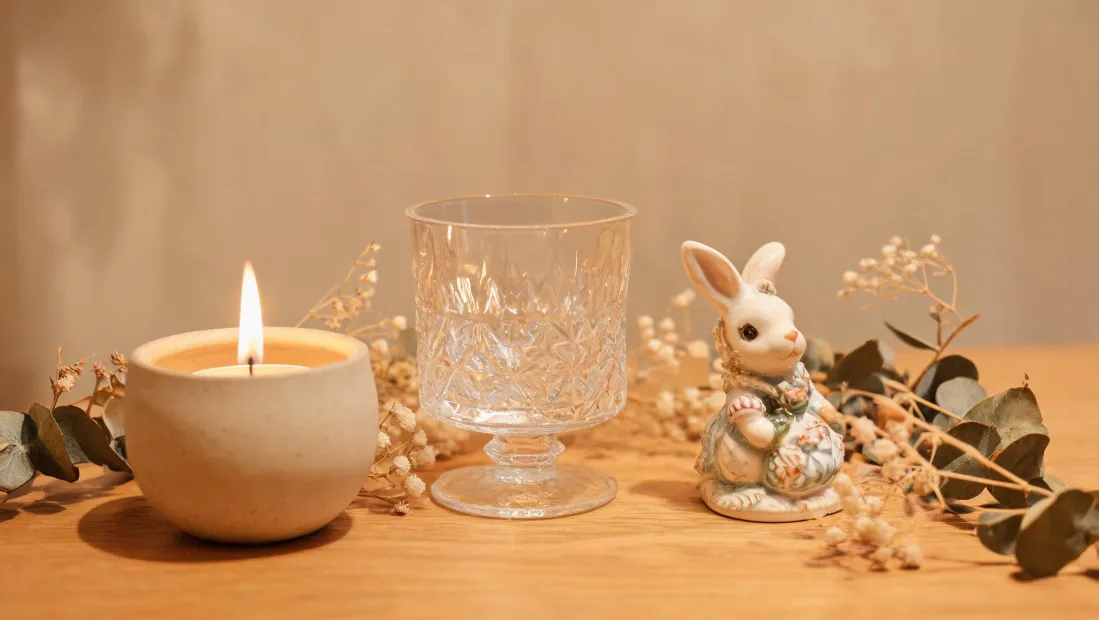
This is the 'make it feel like Anthropologie' scenario. The client doesn't necessarily need the real logo. They need the material language: linen, ceramic, warm neutrals, imperfect finishes. A box with a linen journal, a small ceramic vase, and a candle usually lands well.
Start with the journal. It's the safest item in the box. A5 linen-covered journal with 120 GSM pages costs about $6-10 per unit at 500+ quantity from our current supplier (2025 quote). Add foil stamping for $0.50-1.50 per unit, depending on how many colors you need. A comparable journal at Anthropologie runs $18-28 before any customization. That's the core value case for a white-label supplier: you pay for the style, not the brand anchor.
Now the vase. I do not skip this cost analysis anymore. Ceramic vases look beautiful in the product photo and break in transit. Our 2024 shipping data showed about 4% breakage on vases under $15. I now add a 5% replacement cushion before approving any vase-heavy order. That invisible line item separates a sensible budget from a surprise reorder.
If you're adding a printed note card, use the same math as online printing. For 500 double-sided 14pt cardstock cards, publicly listed prices in January 2025 ranged from $20-35 per 500 at the budget tier to $60-120 per 500 at the premium tier. That's less than $0.25 per card even at the high end. Cheap enough to make every box feel intentional.
Scenario 2: The Gift Card Request (Or: 'Anthropologie Gift Card Where to Buy?')
A client once asked me, 'anthropologie gift card where to buy?' My first answer was a link. My second answer was a policy.
Gift cards are a legitimate solution for low-touch situations. If you're sending to a distributed team, a client who travels constantly, or a group of people who have explicitly said they don't want more 'stuff,' a gift card is the most cost-effective option. Less packaging waste, no breakage, no sizing.
But for your top accounts, a gift card is usually the wrong call. In my experience, and yes I track this, a $100 gift card gets spent once and forgotten. A $75 journal-and-vase set sits on a shelf for years. That's a cost-per-impression difference, not a sentimental argument.
Here's the counterintuitive advice: a gift card is better for low-value gifts than high-value ones. If you're spending $50 per person, a gift card is fine. If you're spending $150 per person, it signals that you didn't have time to think about them. The same amount of money buys a much more memorable branded experience.
If you do buy gift cards, buy through the retailer's official B2B or gift card team. The 'where to buy' matters for invoicing, fraud protection, and delivery tracking. Don't rely on a resale marketplace.
Scenario 3: Customization, DIY, and the Picture Frame Trap
Custom gifts are where budgets go to die. The client says 'custom frame.' You hear 'a frame with our logo.' They hear 'a fully bespoke object made from walnut and brass.' You discover the difference when the first sample arrives and it's $450 over estimate.
This happened to me. I said 'custom 8x10 picture frame,' and the vendor heard 'unique sculptural piece.' Result: a sample that looked nothing like the reference photo and a quote that made my spreadsheet laugh. That's a communication failure, not a quality issue. The fix is a written spec with dimensions, material, finish, logo placement, packaging, and a physical proof before production.
If 'how to make a picture frame in mc' has ever appeared in your search log, you probably know the Minecraft answer: 8 sticks and 1 leather. It's a fun query, but it also shows how many people think DIY is a practical sourcing strategy. For one gift, sure. For 200 branded units, no.
The hidden cost in custom frames is setup. Die cutting setup can run $50-200 depending on complexity, based on online printer fee structures I've seen in 2025. A 'free setup' offer sometimes hides those costs in per-unit pricing or a higher minimum quantity. I built a cost calculator after getting burned on that twice.
The same logic applies to vases. Add a $12 vase to a custom program and you also need bubble wrap, double boxes, and breakage allowance. In Q2 2024, we ordered vases from a budget vendor with an unbeatable unit price. The surprise wasn't the price. It was the 9% breakage rate that forced a $1,200 reorder before a client event.
For custom picture frames, use a vendor who shows you a physical proof and itemizes setup costs. That's not old-fashioned. That's self-defense.
Scenario 4: The Outlet Hunt vs. Direct Wholesale
Every few months, someone on the team searches 'anthropologie home outlet near me' and comes back with a photo of a $40 vase marked down to $19. It looks like a sourcing win. It isn't.
Outlet shopping works for one-off personal purchases. It doesn't work for corporate gift programs because you need consistency: the same product, the same finish, and the same availability in 30 days. Outlet inventory is liquidation. Wholesale catalogs offer replenishment.
Do the total cost math before getting excited about a markdown. A $19 outlet vase plus staff time to drive, select, wrap, and track it, plus no reorder guarantee, plus inconsistent packaging, can easily exceed a $28 wholesale vase with solid packaging and a reorder option.
I've compared 8 vendors over 3 months using a TCO spreadsheet. I've analyzed $180,000 in cumulative gift spending across six years. Twice, the cheapest-looking quote was the most expensive supplier in the end—not because of quality, but because of hidden shipping, packaging differences, and the cost of managing exceptions.
Total cost of ownership includes base price, setup fees, shipping, rush fees, and potential reprint costs. The lowest quoted price often isn't the lowest total cost.
How to Tell Which Scenario You're In
Use the client's language to decide:
- If they name a brand, treat it as a brand request. If they describe a feeling, treat it as a style request.
- If they ask about a gift card, ask how many recipients and how much per person. Under 25, gift cards are fine. 25 to 250, a branded journal or vase program gives better cost per impression.
- If they ask about DIY or 'making' something, get a written spec. Custom only makes sense with a 6+ week lead time and a vendor who can show you physical samples.
- If they mention an outlet, ask one question: 'Do you need 10 of these or 100?' If it's 100, outlets are not your supply chain.
There's no universal answer. But if you sort the problem correctly, you'll usually find the answer faster than the person who just searches for 'anthropologie home outlet near me' and hopes for the best.
An informed client asks better questions and makes faster decisions. I'd rather spend ten minutes explaining total cost of ownership than deal with a mismatched order later. That's the whole point of this framework: not to sell you one answer, but to help you find the one that works for your budget, your timeline, and your client's actual expectation.

Elise Laurent
Elise Laurent is a crystal and decorative glass quality analyst covering crystal figurines, vases, ornaments, suncatchers, and gift glassware. She examines ISO 6486-1 where food-contact glass dinnerware applies, then uses polarized strain inspection, dimensional checks, surface-defect grading, and refractive clarity to compare decorative pieces outside that scope. Her work helps sourcing teams choose materials, finishing routes, and protective packaging without confusing visual brilliance with verified durability.