Corporate Gifts with Anthropologie Style: Three Scenarios for Candles, Throw Pillows & Promotional Products
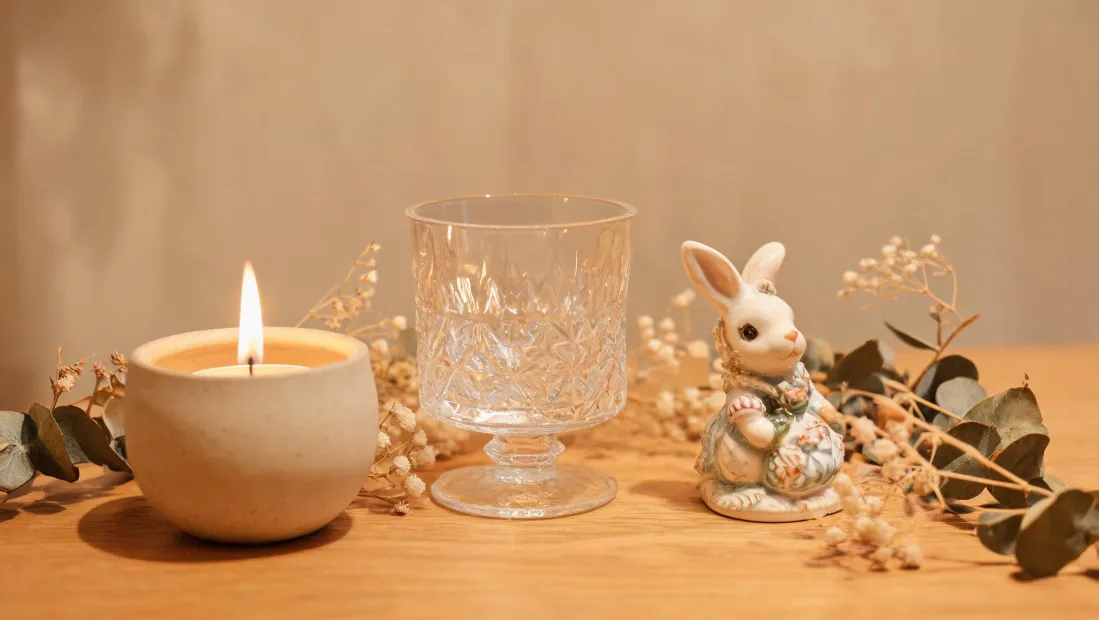
If you've ever typed "anthropologie holiday in the city mug" into Google, you know what I'm talking about. It's the kind of mug that makes you want to wrap your hands around it all winter. Same with the Anthropologie wedding dress sale—people don't just buy a gown; they buy the look. And then there are the scented candles and throw pillows that turn a client's office into a place they actually want to work in.
But when I'm buying corporate gifts, I don't have one answer. I have three. Because the right choice depends on who's getting it, what we're trying to achieve, and—let's be honest—how much is left in the budget. Here's my mental decision tree.
Three Scenarios, Three Different Approaches
I'm an office administrator for a 200-person company. I manage all our gifting and merch purchases—roughly $60k a year across 8 vendors. When I took over in 2020, I thought there was a "best" type of corporate gift. Wrong. The best gift is the one that fits the situation.
I keep running into the same three scenarios:
- Scenario 1: You need branded merch for a trade show or to sell in a company store.
- Scenario 2: You're curating a premium gift box for key clients.
- Scenario 3: You're doing employee appreciation on a tight budget.
Different goals, different products, different suppliers. Let's walk through each.
Scenario 1: Branded Promotional Products for Events
Here's the thing: "can you sell promotional products?" is a question I hear a lot. The answer is yes—provided you source them properly and have the right to put your logo on them. But the real challenge is picking stuff people actually keep.
If you're ordering for a trade show, you want practical items. Think notebooks, tote bags, drinkware. A few years ago, I ordered 100 mugs reminiscent of the Anthropologie holiday style and had our logo printed on. We used a reliable promotional supplier, but I almost skipped the final review because we were rushed and "it's basically the same as last time." It wasn't. The logo came back upside down on 400 mugs. $380 mistake.
My advice: go with a supplier that offers both customization and quality. If you're adding branding, use an online printing reference to benchmark prices. For example, business cards cost $20-60 for 500 (based on publicly listed prices, January 2025). A branded notebook or mug will be in a similar range per unit when ordered in bulk. Verify current pricing, but it's a good starting point.
Also, practical doesn't mean boring. The Anthropologie Holiday in the City mug is popular for a reason—it's a seasonal design people look forward to. You don't have to copy it, but for a premium feel, choose a mug with a similar weight and finish. And if you're also printing flyers for the event, budget around $80-150 for 1,000 one-sided flyers—again, based on January 2025 online printer quotes. Prices vary, but that gives you a frame.
Scenario 2: High-End Gifts for Key Clients
For our VIP clients, I skip the logo. The goal is to make them feel remembered, not advertised at. Which sounds better: a pen with your company name, or a scented candle that actually smells like the place they vacationed last summer? The candle. Across the board, our clients keep candles and throw pillows on their desks or couches. They don't keep the pen.
This is where Anthropologie-style products shine. In March 2023, our usual supplier for these premium gifts suddenly couldn't deliver. That vendor failure changed how I think about backup planning. We had to scramble to find another supplier that could do a beautiful velvet-wrapped candle box at short notice. Now I keep two sources for every category.
One note on pricing: high-end candles in bulk run about $12-18 each for good quality glass jars. That's not cheap—or rather, it's expensive, but the ROI is in the relationship. We once paid $520 for a dozen candles with custom shipping. My finance team questioned it. But the client's assistant called us the next week to ask where we got them.
If you're wondering about the "anthropologie wedding dress sale" search trend, it's the same principle: people want the aesthetic, and they want a deal. You don't have to sell dresses, but offering a curated bargain on premium items is a smart way to show clients you care about their taste, not just their wallet.
One more thing: check your supplier's rush shipping terms. When we needed replacements, next-business-day delivery cost us +75% over standard rates. It hurt, but it saved the account. Sometimes that's worth it.
Scenario 3: Budget-Friendly Employee Gifts
Employees are the toughest crowd. They've received too many logoed burlap tote bags. But they do appreciate nice things—especially if it comes with a small token that feels personal.
On a budget, I combine a cheap promotional item with one nicer item. For example: a simple branded notepad (printed with your company's logo) paired with a throw pillow or a vase-inspired ornament. The notepad is useful; the pillow shows you put in some thought.
What about the "can you sell promotional products" question here? If you're thinking about selling leftover company merch after an event, check your supplier's terms. Some allow resale, some don't. I'm not 100% sure about the legal specifics in every state—that's a question for your compliance team—but it's worth asking before you commit to a large order. It's one of those things that looks easy until it isn't. Like the time I approved a delivery without checking quantities. Was one click away from ordering 10x what we needed. Dodged a bullet there.
How to Tell Which Scenario You're In
It's not about picking a "favorite" type of gift. It's about reading the situation. Ask yourself:
- Who are the recipients? (Clients, employees, conference strangers?)
- What's the desired outcome? (Brand recall, relationship building, just a thank-you?)
- What's the budget per person? (Under $5, $5-15, $15+?)
- What's your timeline? (Rush orders change everything.)
Based on this, you'll fall into one of the three scenarios. There's no point ordering a $20 candle for a conference booth when you're handing them out to 500 people. And there's no point slapping your logo on a $3 pen and calling it a VIP gift. That's just a pen.
In my experience, scenario 1 needs a supplier that can handle volume and branding. Scenario 2 needs a supplier with aesthetic flair and backup options. Scenario 3 needs a mix of both—and a clear-eyed view of shipping and invoicing.
The vendor who couldn't provide proper invoicing cost us $2,400 in rejected expenses. I verify invoicing capability before placing any order.
That's from my personal list of hard-learned rules. A $2,400 mistake teaches you quickly.
Did we save money when I switched to a more structured approach? Yes. Was it worth the hassle? Jury's still out. But at least the gifts get used now. And that's the whole point—whether it's a scented candle, a throw pillow, a holiday mug, or a branded notebook, choose the thing that fits the person, the purpose, and the budget. That's the only universal answer I've found.

Elise Laurent
Elise Laurent is a crystal and decorative glass quality analyst covering crystal figurines, vases, ornaments, suncatchers, and gift glassware. She examines ISO 6486-1 where food-contact glass dinnerware applies, then uses polarized strain inspection, dimensional checks, surface-defect grading, and refractive clarity to compare decorative pieces outside that scope. Her work helps sourcing teams choose materials, finishing routes, and protective packaging without confusing visual brilliance with verified durability.