Most Anthropologie Decor Dupes Aren't Worth It—A Procurement Manager's Honest Take
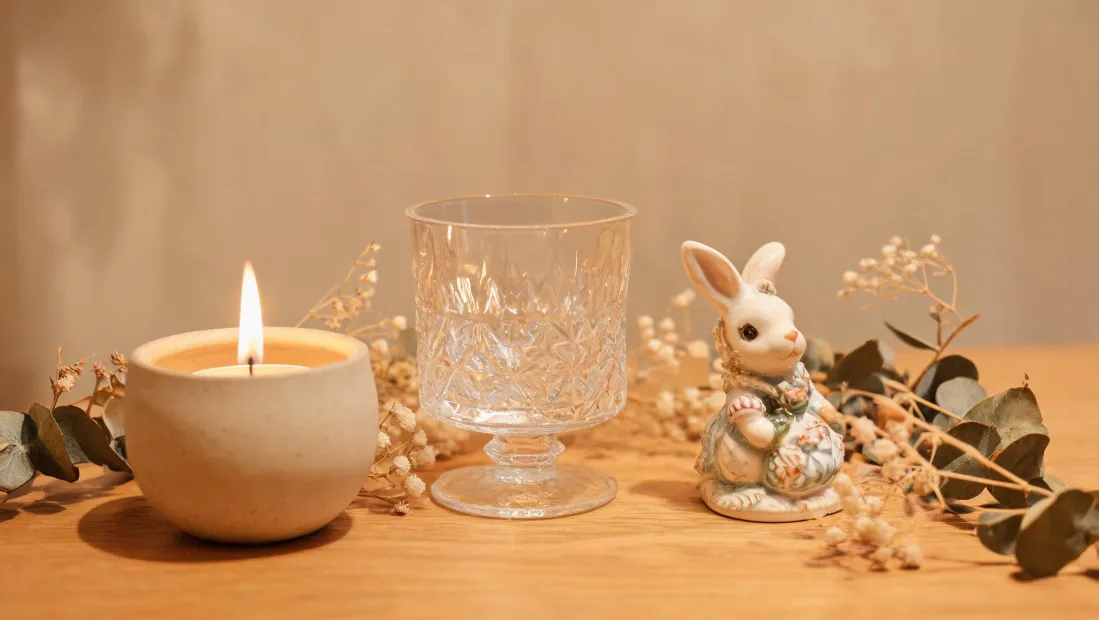
Most Anthropologie decor dupes aren't worth it. I know that sounds backwards from someone whose job is finding cheaper alternatives. But after six years of buying Anthropologie-inspired decor and corporate gifts, I've stopped chasing the lowest unit price. The real cost of a dupe hides in details: the sizing, the scent throw, the color of your logo on a keychain, and the label on a diffuser.
I'm a procurement manager at a 40-person branding agency. I manage a corporate gift budget of roughly $120,000 a year, and I've negotiated with 25+ vendors since 2019. I track every order in a spreadsheet because I've been burned too many times by 'cheap' products that weren't cheap after you added the fixes.
The Anthropologie Photo Frame Trap
When I compared two Anthropologie-style photo frames side by side last year, I finally understood why cheap dupes are a trap. The product photos looked identical. One frame had a solid resin body and a standard 5x7 opening. The other had the same carved look, but the inner opening was 5.25 x 7.25 inches. That quarter-inch difference meant our 5x7 prints didn't fit. We had to trim every insert by hand. For an order of 300 frames, that's not a detail—that's a workday and a half.
If you're buying an Anthropologie photo frame for corporate gifts, check the inner dimensions before you order. Don't assume 5x7 means 5x7. Ask about the backing too. Cheap frames often use thin cardboard that bends in shipping, so you end up replacing a chunk of them before they reach your client.
Standard print resolution for photo prints is 300 DPI at final size, per industry print standards. But if the frame is a weird size, you'll be re-printing or hand-cutting to fit. In Q3 2024, our usual supplier quoted $14.20 per frame in bulk; the cheap version was $6.10. After custom trimming, replacement of bent backings, and the extra labor, it cost us $15.40 per usable frame. The $14.20 frame ended up being cheaper and on time. Prices as of then—verify current pricing.
Jar Candles: Count Burn Hours, Not Just Price
Jar candles are one of the most popular corporate gifts we source. They're warm, unisex, and easy to brand. But a cheap Anthropologie-style jar candle can cost more than a premium one in the long run.
A $9 dupe might burn for 25 hours. A $16 candle with a proper cotton wick and a soy blend might burn for 50. That's $0.36 per burn hour vs. $0.32. And that's before you factor in the impression problem: a candle that tunnels and dies halfway looks bad on a client's desk. I'd rather spend an extra $7 on something that lasts than explain why the gift fell apart.
Looking back, I should have tested the cheap candle before ordering 200. At the time, the price was so good I skipped the sample. It cost us a reorder and an awkward client conversation. I want to say that first batch came to $8.60 per unit, but don't quote me on that—the invoice is in our system.
Keychains and the Pantone Problem
Keychains are the one product where I'm happy to buy the cheapest option. They're low stakes. If a keychain gets scratched, nobody's brand is ruined. But even with keychains, there's a catch: color accuracy.
We once ordered 500 branded keychains for a trade show. The supplier's 'navy' was much lighter than our logo. When I compared it to the Pantone Color Matching System, it was off by about 6 Delta E—visible to most people. According to Pantone Color Matching System guidelines (pantone.com), brand-critical colors should be within Delta E < 2. The vendor didn't know what Delta E was. We had to reorder, and the 'cheap' keychains ended up costing more than the premium option would have.
If you're putting a logo on any Anthropologie-style merch, ask for a printed proof in the actual material. Colors look different on plastic, metal, and paper. Don't trust a screen.
Vases and Ornaments: Where I'll Happily Buy Cheap
Not every Anthropologie-inspired product needs a premium version. Vases are a good example. A vase holds flowers. It doesn't need a standard size, it doesn't burn, and it rarely carries your logo. Buy the $12 dupe vase and spend the difference on better flowers. Ornaments are similar—as long as they're not going to be handled too much, a lightweight ornament is fine. Throw pillows are the middle ground: the cover might look right, but if the insert is lumpy, the pillow looks bad on a chair. So with pillows, don't cheap out on the fill. The trick is to know which products have hidden performance requirements and which ones are just decoration. In procurement terms, that's 'fit for purpose.'
Can Reed Diffuser Be Used in an Electric Diffuser?
Short answer: no. Or rather, not if you want it to work properly. I see this question all the time, and I don't blame people for asking. 'Reed diffuser' and 'electric diffuser' sound like the same category. They're not.
Reed diffuser oil is a concentrated fragrance mixed with a carrier oil designed to climb reeds and evaporate at room temperature. Electric diffusers—especially ultrasonic ones—work by vibrating water and oil into a mist. If you pour reed oil into an electric diffuser, it can clog the mister, make the scent weak, or damage the unit. Some oils might seem fine at first, but the carrier oil separates over time.
Honestly, I'm not sure why the industry doesn't label this more clearly. My best guess is that 'diffuser' became a catch-all term. But if you're buying corporate gifts, this matters. Don't assume a reed diffuser and an electric diffuser are interchangeable. Choose one or the other, and check the label.
An informed customer asks better questions and makes faster decisions. I'd rather spend 10 minutes explaining this than deal with a client who thinks we gave them a broken product.
So Should You Buy Anthropologie Decor Dupes?
Here's where people expect the 'it depends' answer. It doesn't. Buy the dupe when the dupe doesn't create hidden work. If you need a one-time event prop, buy the cheapest Anthropologie-style vase you can find. But if you're buying for corporate gifting, repeat orders, or anything with your branding on it, calculate the total cost before you fall for the low price.
We've all heard the argument: 'It's a dupe, it's supposed to be cheap.' Sure. But cheap is not a price point—it's a total cost. A $9 candle that burns for 25 hours and a $16 candle that burns for 50: which one is cheaper? The $16 candle. A $6 frame that needs custom trimming and a $14 frame that fits standard prints: the $14 frame is cheaper. Once you've tracked 200+ orders for six years, you stop arguing about unit price and start asking about cost per use, cost per order, and cost per 'can you just fix it?' email.
This is why I keep saying most Anthropologie decor dupes aren't worth it. Not because the products are bad. Because they're often bought for the wrong reasons. If you know what to check, you can save money. If you don't, the dupe will cost you more than the original—and that's not a dupe. That's a donation.

Elise Laurent
Elise Laurent is a crystal and decorative glass quality analyst covering crystal figurines, vases, ornaments, suncatchers, and gift glassware. She examines ISO 6486-1 where food-contact glass dinnerware applies, then uses polarized strain inspection, dimensional checks, surface-defect grading, and refractive clarity to compare decorative pieces outside that scope. Her work helps sourcing teams choose materials, finishing routes, and protective packaging without confusing visual brilliance with verified durability.