Planner, Jar Candle, or Scrapbook Gift? A Corporate Gift Buyer’s Scenario Guide
Take it from someone who has turned roughly $24,000 in wasted corporate-gift budget into a checklist: the question “what should I get them?” is rarely the right question. The real question is which scenario are you in?
I’ve handled corporate gift and branded merchandise orders for about six years, and I’ve personally made and documented 17 significant mistakes. Most of them followed the same pattern: I recommended one great product to everyone, regardless of who they were.
A quick caveat before I dive in: my experience is based on around 300 orders, mostly in the 50–500 unit range. If you’re buying for a 5,000-person conference, or if you’re sending one ultra-luxury gift to a VIP, your thresholds will be different. This guide is for the normal, messy middle of business gifting.
Let me show you what went wrong, then give you the scenario framework I use now.
The mistake that ruined my faith in “safe” gifts
In 2021, I committed to custom planners as the default gift for a sales team. It seemed like a no-brainer: planners are beautiful, useful, and they carry branding nicely. We ordered 240 planners—actually, 240 or 280, I’m mixing it up with a candle order; I’d have to check the invoice. The number isn’t the point. The point is that this sales team ran entirely on digital calendars. The planners arrived, we sent them out, and about a year later I saw almost half of them still sitting in a storage corner, spines unbroken.
That mistake cost us around $5,000 in product plus a couple of awkward follow-ups. The lesson wasn’t “planners are bad.” It was that a good gift in one scenario is clutter in another.
So I built a framework. Here’s the version we use for every corporate gifting inquiry.
Four common gifting scenarios
There is no universal answer, but there are four patterns that cover most Anthropologie-inspired corporate gift requests:
- The Calendar Lover — they live by paper planning. Best pick: a custom planner or journal from our Anthropologie-style stationery line.
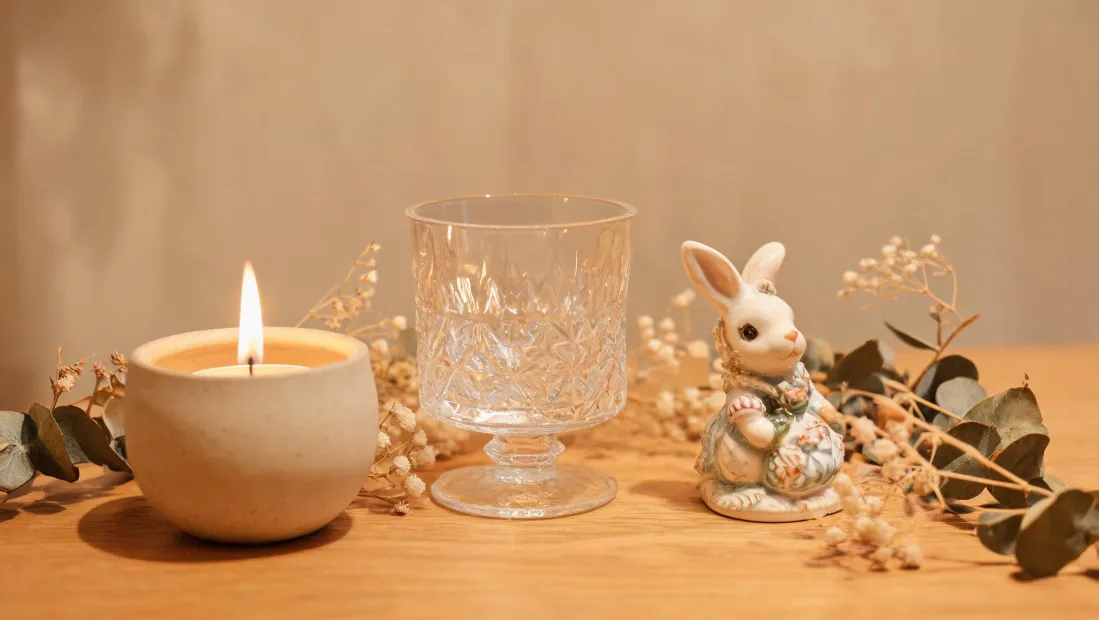
- The Ambiance Creator — they’re always lighting a candle and rearranging their space. Best pick: a jar candle with a restrained scent.
- The Memory Keeper — they save ticket stubs, print photos, and ask what to get for scrapbooking. Best pick: a photo-safe memory or scrapbooking set.
- The Wedding-Phase Romantic — they want that soft, textured Anthropologie aesthetic for a wedding season. Best pick: a keepsake guest favor/gift set, not a fashion item.
Notice what’s missing: you don’t see one “best seller.” That’s the part I had to unlearn. Let’s walk through each scenario, including the traps I’ve fallen into.
Scenario 1: The Calendar Lover
Start by asking how this person organizes their life. Are there sticky notes multiplying around their monitor? Do they carry a physical notebook into meetings? Do they annotate while reading? If yes, a custom planner is worth serious consideration.
What I’ve learned: planning products are not only about functionality. A planner says “I want you to feel organized for the next 12 months.” It’s also a relationship-builder. In business gifting, it keeps your brand visible in their everyday environment. That’s why so many buyers default to planners.
The trap is assuming “planner” means the same thing to everyone. A structured dated planner works for someone with daily deadlines. A blank journal works better for a creative who needs room to doodle. Ask about their planning style before you choose a layout.
And if you’re imprinting a logo, confirm the brand color on paper, not just on screen. We once approved a deep corporate blue that shifted slightly purple in production. We now use Pantone color standards and request a physical proof. The typical tolerance for brand-critical colors is Delta E under 2—worth putting in your spec sheet so there’s no debate later.
Part of me still wishes there were one foolproof product I could recommend every time. Another part knows that one-size-only thinking is what created that stack of unused planners. The framework is honestly slower at first, but it saves money later.
Scenario 2: The Ambiance Creator
If your recipient has a shelf of books, a linen throw, and a candle on the coffee table, you’re probably dealing with an Anthropologie-style home enthusiast. A jar candle is one of the easiest gifts for this person.
Here’s the counter-intuitive part: don’t choose the strongest, most interesting scent. You may love a heavy pear-vanilla that perfumes a whole room, but in a shared office or a small apartment, that intensity can become intrusive. A client once loved a lavender-eucalyptus candle so much she requested it for her whole team. After a few days, three staff members reported headaches. The candle itself was high quality—it was just the wrong scent for that setting.
For corporate orders, we now start with a lower-throw option: a lighter single-note fragrance or a soft citrus blend. The jar can still carry the Anthropologie-inspired aesthetic through its color and texture.
And if you plan to make green claims on the label, be careful. Per FTC Green Guides, wording like “eco-friendly,” “natural,” or “recyclable” needs to be substantiated. Don’t call a candle eco-friendly if the glass jar has a mixed-material lid that most local recycling programs won’t accept.
Scenario 3: The Memory Keeper
When someone searches “what to get for scrapbooking,” the best answer starts with another question: is the person a beginner or a devoted scrapbooker?
If they’re starting out, a curated scrapbooking gift set makes sense: acid-free photo sleeves, an archival-quality album, and some paper accents. For a corporate gift, present it as one coordinated set rather than a pile of loose supplies. The unboxing experience matters.
If they’re devoted, be careful about choosing their tools. Scrapbookers have very specific preferences for paper weight, adhesives, and cutting systems. A well-meaning generic kit can feel like buying yarn for a knitter who only uses wool. In our B2B orders, we handle this by printing a custom photo book from the recipient’s own photos. It feeds the memory-keeping instinct without pretending to replace their favorite tools.
Quality trap: if you’re printing photos, respect print resolution. We once had to reprint 120 books because the client sent photos saved at 72 DPI. They looked fine on screen; on a 12x12 page, they were soft. Standard commercial print needs at least 300 DPI at final size. If an image is 3000 x 2000 pixels, the largest crisp print is about 10 x 6.7 inches. Anything bigger needs upscaling or design work.
Scenario 4: The Wedding-Phase Romantic
This scenario confuses a lot of corporate gift buyers. People often land on Anthropologie-inspired pages after searching for “used anthropologie wedding dresses” or “anthropologie wedding guest” style. That aesthetic—vintage romantic, textured, slightly bohemian—is not limited to apparel. We get asked to translate it into event gifts: favors for out-of-town guests, gifts for employees who are getting married, or host-gift boxes for a client’s wedding weekend.
For that scenario, I recommend a keepsake-based gift set rather than anything fashion-related. A small candle, a printed photo frame, or a tightly lettered card can echo the Anthropologie-inspired look without pretending to be a wedding dress.
The mistake I made on our first wedding-favor project was timing. We priced an order in abstract, then realized the event date was only four weeks away. We pulled it off, but only by paying overtime. Now our ordering checklist starts with one question: when must this land in the recipient’s hands? If there’s a fixed event date, that date governs everything else.
This is also a case where the efficient route—a mostly standard favor set—is the more considerate route. Trying to fully customize every piece for a wedding creates decision fatigue and production delays. Standardizing the structural pieces leaves time and budget for the one or two details that feel personal.
Which scenario are you in?
If you’re still on the fence, use this mini-diagnostic:
- Look at their desk. Paper notebooks? Scenario 1. Diffuser, postcards, or home design magazines? Scenario 2.
- Look at their weekends. Do they make photo albums, scrapbook pages, or memory boxes? Scenario 3.
- Look at the calendar. Is there a wedding, engagement party, or event in the next quarter? Scenario 4.
- If you can’t tell, ask. An email that says “which of these would you genuinely use?” may feel less magical, but it’s better than another unused gift. We do this for our largest orders, and clients usually respect the efficiency.
I have mixed feelings about gift guides now. They’re useful, but if they don’t ask about the recipient’s scenario, they’re only a catalog of things that might end up unused. The better filter is fit: does this object match how this person lives and works?
Bottom line? There’s no one-size-fits-all Anthropologie-style gift. A custom planner is brilliant for the right calendar lover, a jar candle is a win for the right ambiance creator, and a scrapbooking set is exactly what the right memory keeper wants. The secret is not picking the trendiest item—it’s identifying the scenario before you choose the product. Not asking when you’re unsure? That’s the red flag.
Switching to this scenario framework cut our fulfillment redos by a meaningful margin and made quoting faster. That’s the part that matters from a business perspective: efficiency isn’t the enemy of personalization. It’s what gives you the budget and time to personalize the details that count.
There’s also something deeply satisfying about seeing an order actually get used. After the planner fiasco and the candle incident, when a client sends a photo of their team using the gift, that’s my payoff. No more storage-closet casualties.

Elise Laurent
Elise Laurent is a crystal and decorative glass quality analyst covering crystal figurines, vases, ornaments, suncatchers, and gift glassware. She examines ISO 6486-1 where food-contact glass dinnerware applies, then uses polarized strain inspection, dimensional checks, surface-defect grading, and refractive clarity to compare decorative pieces outside that scope. Her work helps sourcing teams choose materials, finishing routes, and protective packaging without confusing visual brilliance with verified durability.