Rush Corporate Gifts: Branded Merchandise vs. Promotional Products by Timeline
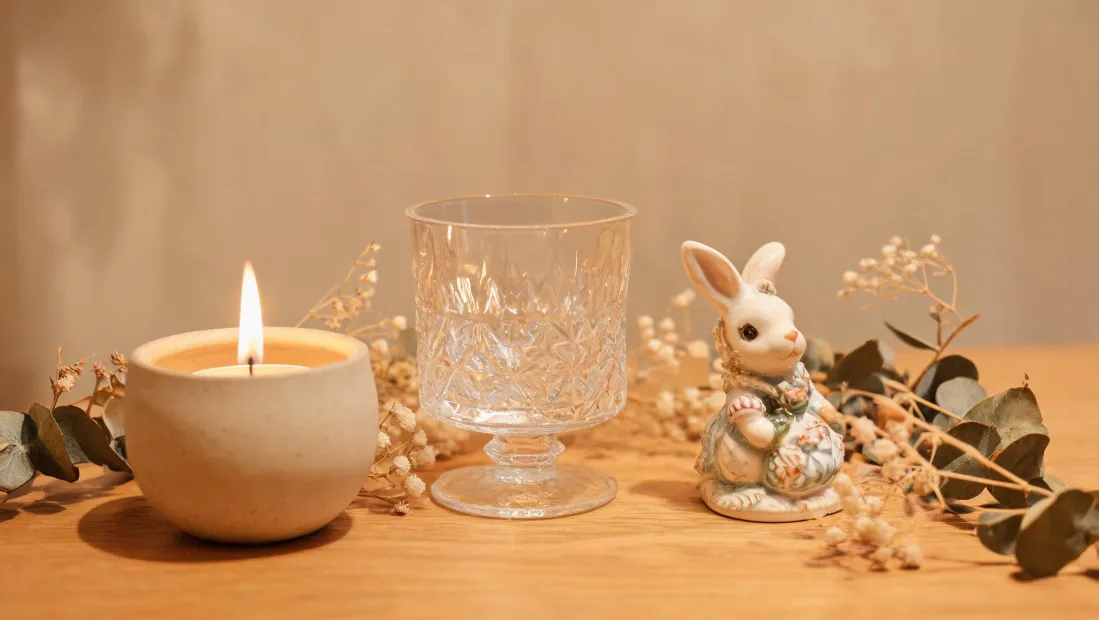
In my role coordinating corporate gift programs for B2B clients, I've handled 200+ rush orders in nine years—including same-day turnarounds for event planners whose shipments vanished in transit. When I'm triaging a rush order, the first question is never "what's cheapest." It's "what's actually possible in the time we have?"
The question I get most from corporate buyers: branded merchandise or promotional products?
The honest answer: it depends. There's no universal right choice. I've watched teams deliver a $15,000 gifting program with three days' notice using high-end candles. I've also watched teams burn their entire budget on "rush" custom merchandise that arrived with misprinted logos and a six-day delay.
So here's how I break it down: three scenarios, three different answers. The dividing line is time. But "how much time you have" is harder to calculate than most people think. I'll show you exactly how to compute it at the end.
Scenario A: The 72-Hour Window
You're three days out. The client gifts haven't shipped. The order was wrong. Someone decided gifts were needed on Monday for a Thursday event.
Real talk: you're not doing custom branding from scratch. No credible vendor will promise custom-manufactured merchandise in 72 hours. Anyone who says yes is either lying or planning to cut corners that will cost you later.
What actually works in this window:
- Luxury ready-made items that stand on their own—high-end candles, home fragrance sets, ornaments
- Quality stationery with a personal note
- Home decor pieces like you'd find in the Anthropologie home collection
A candle like Anthropologie's Capri Blue is a great example: packaged, gift-worthy, zero customization needed. In March 2024, a client called at 2 PM needing 400 gifts for a ceremony 36 hours later. Normal custom candle production would have been 15 business days. We placed an order for Capri Blue candles from an in-stock supplier, added branded tissue and a thank-you card—printed locally overnight—and delivered the next afternoon.
The client's alternative: walking into a $50,000 annual partner event empty-handed.
Not ideal for margin. But workable. And in that scenario, workable wins.
Price reality check: you'll pay near-retail for in-stock inventory. That bothers some procurement managers. I understand. But in a 72-hour window, the cheapest route is the most expensive mistake. The lowest quote has cost us more in 60% of the rush cases I've tracked. When a vendor is cheap and fast, quality is usually the variable that gives.
One caveat: in this window, your brand isn't a logo. It's the presentation. A beautiful gift with a handwritten note outperforms a misprinted branded product every time.
Scenario B: The 1–3 Week Sweet Spot
This is where most corporate gift orders actually land. And it's where semi-customization earns its reputation.
Fully custom manufacturing is still risky at this timeline. But light branding—printed labels, engraved surfaces, custom covers—works beautifully.
What works at this timeline:
- Photo books with custom covers. Standard production is 5–7 business days for printing and binding—or rather, that's the quote. Realistically, plan for 8. At 10–12 business days out, you can get a branded photo book manufactured and shipped with buffer to spare. Just make sure your images are 300 DPI at final print size.
- Engraved ornaments. Laser engraving on glass or wood adds about 2–3 business days to base production. Seasonal, but almost universally well-received.
- Stationery with printed logos. Journals and notebooks with a printed brand mark can clear in 7–10 business days.
- Candles with custom labels. Stock vessel, your label. We've turned around labeled candle programs in exactly 8 business days.
This is where the "why can't I just buy generic candles on Amazon?" question comes up. Because the label is the difference between a promotional product and a gift. In corporate gifting, that difference is the entire point.
Honestly, I'm not sure why some vendors consistently beat their quoted timelines while others consistently miss by a week. My best guess: internal buffer practices. Some shops quote optimistic and bake slack into the schedule. Others quote realistic days and have zero room for error. I can't always tell them apart from the outside. So I pad my internal timeline by 20% and choose products with fewer dependencies.
And I have a scar to remind me why. In 2023, we lost a $30,000 contract by trying to save $2,000 on standard production instead of paying for rush. The order was 1,000 custom-labeled candles before a major industry event. The vendor quoted 12 days. It took 18. Missing that deadline meant our client's event placement was compromised. That incident is why our company policy now requires a 48-hour buffer on every quoted delivery date. No exceptions.
Scenario C: The 30+ Day Full-Custom Route
If you have a month or more, you can do true branded merchandise: custom candle vessels in your brand colors, custom packaging, woven labels, made-from-scratch production. This is what "branded merchandise" means when it's not just "products with a logo."
What works at this timeline:
- Custom candle vessels. Pantone-matched to your brand identity. If your brand color isn't a standard Pantone value, custom color mixing adds a full week. Industry tolerance for brand-critical colors is Delta E < 2—a standard that requires time in the production schedule, not a shot in the dark.
- Full custom photo books and planners. Custom paper stock, foil-stamped covers, sewn bindings. For a premium hand-feel, 100 lb text paper (about 150 gsm) is the sweet spot. Sourcing custom paper adds 2–3 weeks.
- Custom packaging. Rigid gift boxes, custom-printed tissue, branded ribbons.
- Overseas manufacturing runs for larger quantities where unit cost matters.
But here's the uncomfortable truth: full-custom isn't always the right call even when you have time.
I went back and forth for two weeks on a client's order last year. Custom merchandise offered full brand immersion; semi-custom offered reliability and cost predictability. On paper, custom was the better brand decision. But my gut said the risk wasn't worth it, so I chose semi-custom. Even after committing, I kept second-guessing—what if the brand team felt I'd undersold their vision? The three weeks until delivery were stressful. Ultimately, the products looked excellent, but I don't recommend making it a habit.
People assume the higher price is what makes a product premium. That's backwards. Vendors who deliver consistent quality can charge more—the price is a reflection of reliability, not the cause of it. So when you're deciding between custom and ready-made, you're really deciding how much production risk you want to carry.
This is also where the promotional products vs. branded merchandise distinction gets clarity. Promotional products are cost-per-impression tools: pens, lanyards, tote bags. Branded merchandise is relationship-building: quality goods that reflect the buyer's brand through association. The upfront cost is higher. But the total value—the impression, the retention, the relationship—is where real ROI lives.
How to Tell Which Scenario You're In
Run this five-minute test:
- Count backward from your event date in business days. Start from the day gifts need to arrive—not the event date.
- Subtract shipping time. Ground takes 3–5 days off your production window; expedited takes 1–2. Procurement teams skip this step and end up in Scenario A when they thought they were in Scenario B.
- Add a 20% buffer. The step nobody takes until they've been burned.
- Compare to the windows: under 5 business days lands you in Scenario A. 5–20 business days in Scenario B. 20+ business days in Scenario C.
The question isn't "what looks more premium?" It's "what can you actually deliver on time, correctly?" If you're in Scenario A, stop asking about logos and embrace ready-made quality with upgraded presentation. In Scenario B, look for light-branding options and guard your timeline. With a month or more, go custom—but verify every vendor's production timeline against your actual date before committing.
One final thought. The buyers I've worked with longest all share a habit: they treat a gift as a relationship investment, not a procurement line item. The $11 generic candle gets forgotten at the bottom of a gift bag. The $32 Capri Blue candle with custom tissue and a handwritten note sits on a desk for months. The unit price difference is trivial compared to the difference in impression.
That's the whole argument, really. Timeline, budget, quantity—they all matter. But they serve one question: what does the gift say about your company? Answer that honestly, and the branded merchandise vs. promotional products decision gets a lot easier.

Elise Laurent
Elise Laurent is a crystal and decorative glass quality analyst covering crystal figurines, vases, ornaments, suncatchers, and gift glassware. She examines ISO 6486-1 where food-contact glass dinnerware applies, then uses polarized strain inspection, dimensional checks, surface-defect grading, and refractive clarity to compare decorative pieces outside that scope. Her work helps sourcing teams choose materials, finishing routes, and protective packaging without confusing visual brilliance with verified durability.