Sourcing Anthropologie-Style Christmas Gifts Without Blowing the Budget
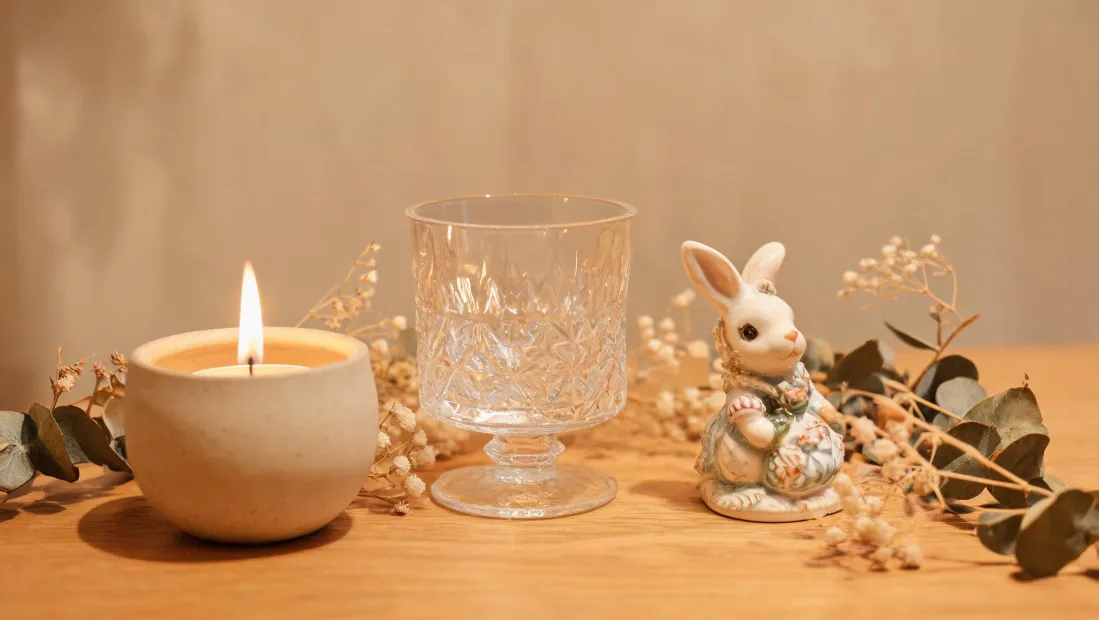
It started on a Tuesday in early August. My CEO walked into my office, set an 80-row spreadsheet on my desk, and said: 'Our clients want the Anthropologie Christmas collection vibe this year. Make it happen.'
I've been managing procurement at a 38-person brand agency for six years. I've tracked roughly $180,000 in cumulative spending across client gifts, event swag, and internal milestone boxes. I've negotiated with 40+ vendors and documented every order in our cost-tracking system. So when my CEO says 'make it happen,' my first move is—okay, almost always—to build a budget grid.
This is the story of how we sourced 80 corporate gift boxes with the Anthropologie Christmas house aesthetic, a crystal ornament that didn't look cheap, and a planner that people actually kept. It's also the story of how I learned that 'free setup' is the most expensive phrase in procurement.
What 'Anthropologie Christmas' Actually Means
'Anthropologie Christmas collection' isn't a SKU list. It's a feeling—matte ceramics, vintage-inspired prints, warm neutral colors, and small details that look handmade. We needed a shared visual language before we could brief a single supplier.
We built a reference board. We didn't copy specific products; we pulled design cues. The Anthropologie Christmas house—that little ceramic building with a warm light in the window—became our anchor. If a sample made someone say, 'that could sit on a shelf next to an Anthropologie piece,' it moved to the next round. If it looked mass-produced and plastic, it failed.
The Quote Process and the TCO Trap
We sent the same spec to eight vendors. Some were online printers; some were turnkey gifting services; one was a wholesale supplier that refused to do branding. The range of quotes was enormous: from $5,400 to $9,200 for the same product list.
Our target was $95 per box fully landed. For 80 boxes, that's $7,600 total. In my experience, if you only compare product prices, you'll miss $20 to $30 per box in hidden costs.
The low-quote vendor was tempting: $5,400 for the product set. But when I built out the total cost, it had a $600 setup fee for custom cover production, $350 freight to our office, a $300 'holiday peak surcharge,' and a $225 charge for logo iterations. That brought it to $6,875—only $25 less than the next vendor, and with a much longer lead time. The 'free setup' promise ended up costing us more in review cycles than we saved.
When we put the two final quotes side by side—same product list, same trim size, different hidden-fee exposure—I finally understood why total cost of ownership beats sticker price. The second vendor wasn't the cheapest. It was the most predictable.
The Crystal Ornament
The hero item in our box was a crystal ornament. We wanted something that caught the light without looking like a $12 drugstore tree decoration. The first sample from the budget source was thin, cloudy, and had a small chip near the hanger.
I'm not a glass expert, so I can't speak to lead content or kiln specifications. What I can tell you from a procurement perspective is this: crystal samples almost always look better in photographs than in hand. We paid $1.80 more per unit for a heavier, clearer ornament. That $144 line item was the best money we spent.
The Planner: Pantone, DPI, and Paper Weight
Planners are the workhorse of corporate gifts. They sit on desks for a year. Our clients are mostly brand managers, so we printed the client's logo, not ours. That made color matching critical.
Our print partner matched the client's signature blue to Pantone 286 C. The industry standard tolerance for brand-critical colors is Delta E less than 2. Per Pantone's Color Matching guidelines, a Delta E of 2 to 4 is visible to trained observers, and above 4 is visible to most people. We gave our designer that spec up front.
We also set resolution rules. Standard commercial printing wants 300 DPI at final size. Our designer supplied a 3000 × 2000 pixel image, which calculates to a maximum print size of 10 × 6.67 inches at 300 DPI. That covered the 8.5 × 11 cover easily. We used a 100 lb text paper—about 150 gsm—for the interior pages. It's a standard weight, so the online printer didn't charge a premium.
The Anthropologie Christmas House Moment
The item that caused the most debate was the small ceramic house. In our internal emails, we called it the Anthropologie Christmas house, even though we knew it was an homage, not the original. The first samples had paint bleeding from the roof to the wall. One manufacturer said the two-tone finish was impossible to control at our price point. Another quoted a $2,000 mold fee.
We didn't abandon the house. We simplified it: a single matte color, no secondary painting, and a tiny LED light inside the window. It looked intentional. Sometimes the fix is not a better supplier; it's a better spec.
The Paint by Number Detour
Midway through the project, our office manager asked a question that derailed me for a good hour: is paint by number free? She wanted a low-pressure activity for the client-gift stuffing party.
The honest answer is yes and no. There are genuinely free paint-by-number templates on museum and hobby websites. We printed a few on the office laser printer at 300 DPI, and they looked better than expected. But 'free' meant no customization, no vector files, and no branded packaging. For an internal break, that was perfect. For a client gift, it wouldn't have worked.
That detour reinforced a rule I try to remember: free is great when the cost of failure is low. The moment you need branded polish, 'free' becomes an expensive illusion.
What I'd Do Differently
Looking back, our biggest mistake wasn't the vendor. It was the timeline. We started in August, but we didn't lock the final product spec until the last week of September. The planner alone took 12 business days to print. The crystal ornaments arrived in two shipments because the first batch failed a drop test. We still hit the mid-November ship date, but only because our account manager called in a favor.
I'll be honest about the limits of this story. If you're sending 15 gifts, or if you need same-day in-hand delivery, skip the online vendor route and call a local gift shop. If you want exact Anthropologie products, buy them from Anthropologie. This approach works best when you need 50 to 500 boxes, you have a clear visual reference, and you can tolerate a 6-to-8-week production cycle.
As of January 2025, these lead times and price ranges were still holding. The corporate gift market changes fast, so double-check current quotes before you budget.
I'm not 100% sure every planner made it onto a desk, but no one complained about the quality. If I had to sum up the project: the Anthropologie Christmas collection look is not a product. It's a filter. You can run almost any gift through it—a planner, a crystal ornament, a ceramic house, even a free paint-by-number print—and come out with something that feels expensive without actually being expensive. I do not mean that you should skip Anthropologie if your client specifically asks for it. But if you're chasing the vibe, this is how we did it.

Elise Laurent
Elise Laurent is a crystal and decorative glass quality analyst covering crystal figurines, vases, ornaments, suncatchers, and gift glassware. She examines ISO 6486-1 where food-contact glass dinnerware applies, then uses polarized strain inspection, dimensional checks, surface-defect grading, and refractive clarity to compare decorative pieces outside that scope. Her work helps sourcing teams choose materials, finishing routes, and protective packaging without confusing visual brilliance with verified durability.