The Real Cost of Corporate Gifting: What I Learned From a Vendor Hunt Gone Wrong
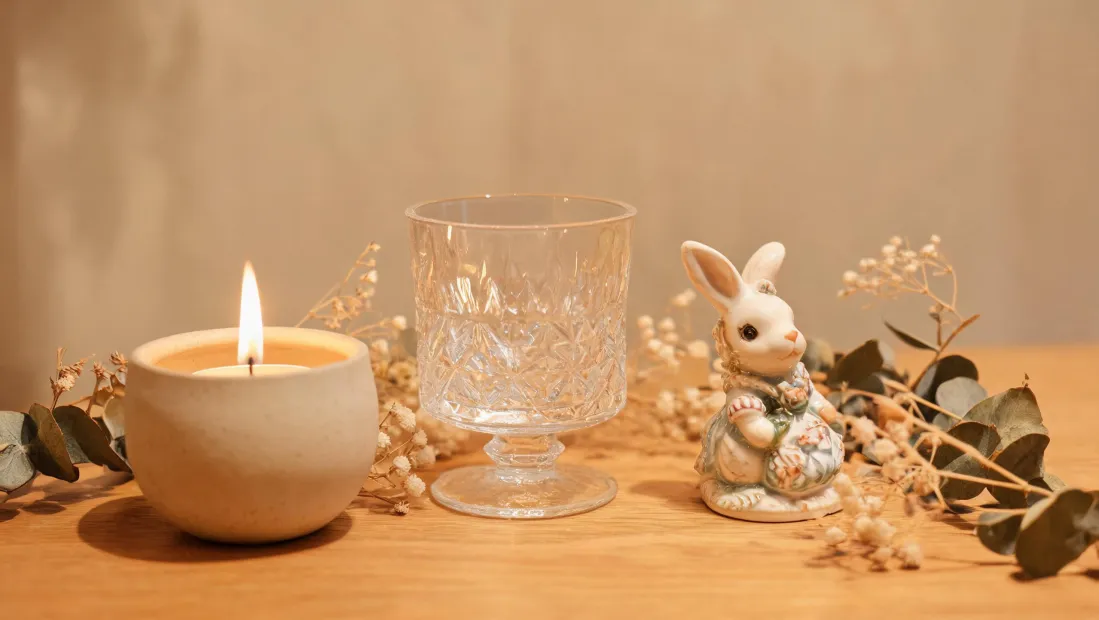
It started with a simple request from our CEO. She wanted a gift for our top 50 clients that felt personal, not generic. Something that said, “we see you”—not “we have a catalog.” She mentioned Anthropologie as the vibe she was aiming for: that warm, curated, home-store aesthetic. I remember her exact words: “I want it to feel like something they’d buy at Anthropologie home store, not a boring corporate trinket.”
Easy enough, right? I thought. Find some nice personalized gift items, slap on a logo, stay within budget. How hard could it be?
Well, over the next several months I learned exactly how hard. I logged over 30 vendor calls, analyzed quotes from 12 different suppliers, and accidentally stumbled into one of the most confusing topics in home fragrance: can you put perfume in a reed diffuser? (Spoiler: the answer changed our entire product selection.) But I’m getting ahead of myself. Let me back up.
Chapter 1: The Shopping Spree (That Wasn't)
I started by browsing Anthropologie brands online, just to get a feel for the design language. You know, the stonewashed linens, the slightly imperfect pottery, the kind of journals that make you want to start writing poetry. The problem? Anthropologie doesn't sell to corporate accounts in bulk. So I had to find vendors that could replicate that aesthetic at scale, with customization.
I found a few promising candidates. One specialized in journals with hand-sewn bindings. Another did custom ceramic mugs that looked like they'd been fired in a tiny Italian kiln. A third offered a gorgeous line of reed diffuser sets in amber bottles.
I settled on a plan: a gift box with a personalized journal (embossed with each client's name), a small ceramic vase (for that Anthropologie home store feel), and a reed diffuser in a signature scent. I asked three vendors for quotes.
The First Mistake: Thinking the Cheapest Quote Was the Best
Vendor A came in at $42 per box. Vendor B quoted $38 per box. Guess who I almost went with? That's right. Vendor B. But I'd been burned before, so I pulled out my TCO spreadsheet (yes, I have a spreadsheet for this). I started adding up all the hidden costs.
- Setup fees for the journal customization: Vendor A included it; Vendor B charged $200 for the tooling.
- Proof changes: Vendor A allowed two rounds; Vendor B charge $45 per extra round.
- Shipping: Vendor A included free domestic ground on orders over $2,500; Vendor B charged $75 for the same service.
- Rush fees: I needed a 10-day turnaround. Vendor A offered it at 15% upcharge; Vendor B wanted 40%.
When I added it all up, Vendor B's “cheaper” quote actually came to $48.50 per box. Vendor A's was $45.20. That's a 7% difference hidden in the fine print.
Chapter 2: The Reed Diffuser Rabbit Hole
Just when I thought I had everything figured out, I hit a wall. Our product manager, a lovely woman who runs our sustainability initiatives, asked a simple question while reviewing the diffuser samples: can you put perfume in a reed diffuser?
I honestly didn't know. I assumed you needed special diffuser oil. But she pointed out that some of our clients were asking if they could repurpose the bottle with their own fragrance oils after the initial scent faded. I had to find out for real.
I called our vendor's product specialist. She explained that traditional reed diffusers are designed for a specific base oil—usually a lightweight, fragrance-grade carrier oil that lets the scent travel up the reeds. Perfume, on the other hand, is much thicker, higher in alcohol, and often contains fixatives that can clog the reeds or cause them to stop wicking. Short answer: no, you generally shouldn't pour perfume into a reed diffuser. It will either not work, or it will work poorly and leave a sticky residue.
But here's what I learned: if you're creative, you can use the diffuser oil as a base and layer in a few drops of perfume to tweak the scent. It won't be as strong as the original, but it can work for personal use. We ended up adding a small card to our gift boxes that explained how to refresh the diffuser safely—which made the gift feel more thoughtful, not less.
This is the kind of thing I would have never known if I hadn't asked. It's also the kind of thing that makes a corporate gift feel expensive and intentional—instead of like something you'd grab at a hotel gift shop.
Chapter 3: The Order Goes Through
After three months of back and forth, we placed the order with Vendor A: 50 custom gift boxes at $45.20 each. That's $2,260 total, including everything. I tracked every step in our procurement system—every proof, every email, every delivery confirmation.
And then came the curveball. The CEO's administrative assistant called. She had a note: one of our clients, a large retail chain, had mentioned that their office manager was “obsessed with Anthropologie brands” and wanted to know if we could add a small ornament from the Anthropologie home store next season. That was the moment I realized: the gift wasn't just a gift. It was a lead generation tool. It opened a conversation.
Lessons Learned (The Hard Way)
Here's what I'd tell anyone planning a corporate gifting project with an Anthropologie-inspired vibe:
- Don't chase the lowest unit price. Calculate the total cost of ownership—setup, shipping, revision fees. They add up faster than you expect.
- Ask the weird questions. Like, “Can you put perfume in a reed diffuser?” The answers might change your product selection—or help you tell a better story.
- Think beyond the logo. Our clients didn't care about our brand on the box. They cared that the personalized gift felt like it was chosen just for them.
- Build in a buffer. We budgeted 8 weeks for production. It took 11. That extra time saved us from rush fees.
Looking back, I wish I had started with a simple question for myself: who is this gift really for? It's not for the company—it's for the human being who is going to put that journal on their nightstand. And if that journal looks like it belongs in an Anthropologie home store catalog, then you've already won half the battle.
This was accurate as of Q1 2025. Vendor pricing and product availability change fast, so verify current options before you start your own hunt. But the lessons—those hold up.

Elise Laurent
Elise Laurent is a crystal and decorative glass quality analyst covering crystal figurines, vases, ornaments, suncatchers, and gift glassware. She examines ISO 6486-1 where food-contact glass dinnerware applies, then uses polarized strain inspection, dimensional checks, surface-defect grading, and refractive clarity to compare decorative pieces outside that scope. Her work helps sourcing teams choose materials, finishing routes, and protective packaging without confusing visual brilliance with verified durability.