We Spent $15K on Corporate Gifts That Got Tossed. Here’s What We Learned.
That Holiday Gift Fiasco of 2023
Let me set the scene. It was November 2023, and I had a budget of roughly $15,000 to order holiday gifts for 300 employees across our three offices. The mandate from my VP of Operations was simple: “Something nice. Not the usual logo USB drive.”
Easy enough, right? I went with a vendor that offered branded tote bags and a set of generic candles. They looked okay in the sample, smelled fine—like “Midwest Vanilla” or whatever. I ordered 350 sets (always have extras).
The reaction? Let’s call it underwhelming. I overheard someone in the breakroom say, “Another bag I’m going to give to my mom.” The candles? Most ended up in the “free pile” in the kitchen. We spent $15K, and the sentiment was... nothing.
That was the moment I knew I had to change my entire approach to corporate gifting.
The Myth of “Safe” Corporate Gifts
From the outside, it looks like the safest bet is to buy neutral, unbranded items. “No logos,” I thought, “that way it feels like a real gift.” The reality is that “safe” often translates to “forgettable.”
People assume that spending more on a single item makes it better. Actually, the value isn't in the price tag—it's in the aesthetic. If your gift looks like it belongs in a hotel lobby, it stays on the desk. If it looks like something from an Anthropologie catalog, it gets photographed for Instagram.
This is the core misconception: Corporate gifts don't need to be expensive to be meaningful. They need to be desirable.
Shifting from Utility to Desire
In our 2024 vendor consolidation project, I had to rethink our gift strategy. I started paying closer attention to what actually made people excited. Not the utility (everyone has a water bottle), but the aesthetic appeal.
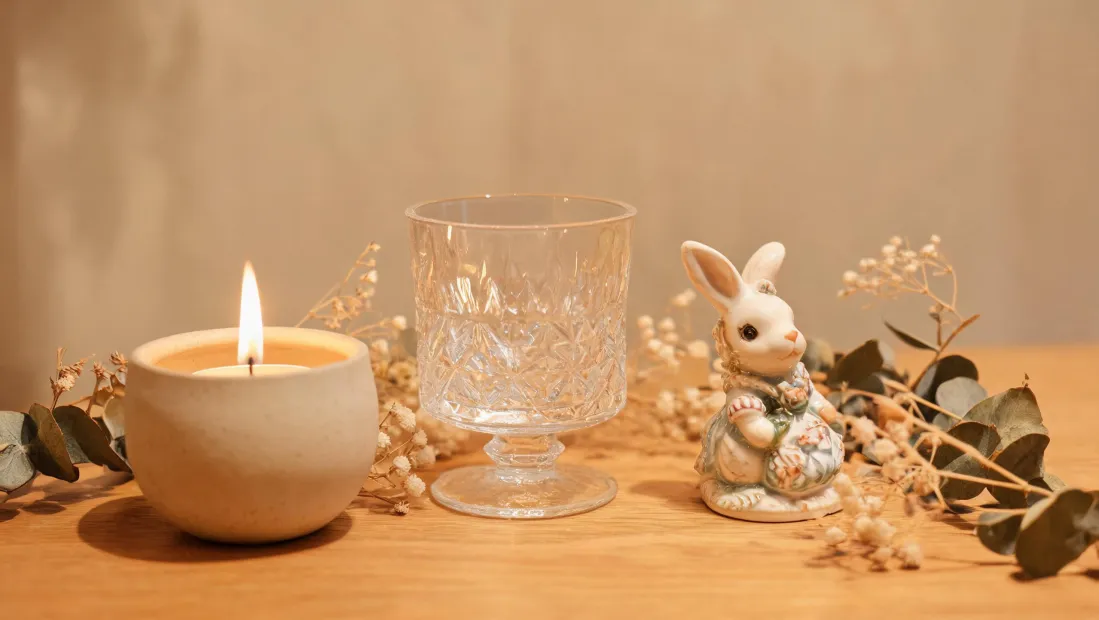
I looked at products that mimic the Anthropologie look—not the price tag, but the vibe. Think: artisanal-looking wall art, bohemian vases (the kind you'd see as an Anthropologie flower vase), and high-end stationery like leather-bound journals and planners.
I found a supplier that specialized in Anthropologie-style pieces. They offered a custom line of ceramic ornaments and stoneware mugs that looked handcrafted. The catch? They cost about 15% more per unit than my generic supplier. My gut said to go for it, but the spreadsheet screamed against it.
The Data vs. My Gut
The numbers said go with the cheaper option—we could get more units, more variety. My gut said the premium look was worth the extra cost. I compromised. I ordered a test run of 50 “aesthetic” sets for a mid-year client appreciation event instead of the full holiday order.
I included a sculptural bone china mug (yes, I checked if you can dishwasher bone china—hand wash only, but that's a feature for quality, not a bug), a small scent diffuser, and a minimalist photo frame.
The result? Four client emails directly complimenting the “lovely gift set.” One VP even asked for the vendor contact to order something for his own home. It was a hit.
Why? Because it didn't look like a corporate gift. It looked like something you'd buy for yourself.
The Evolution of Gifting
What was best practice in 2020 (bulk orders of tech accessories) may not apply in 2025. The fundamentals haven't changed—people still appreciate quality—but the execution has transformed. Now, the trend is towards home decor and intentional style.
I've since shifted my strategy. For the 2024 holiday season, we used a mix of items:
- Home Scent: Soy candles in ceramic vessels (like a high-end Anthropologie candle)
- Decorative Objects: Vases and throw pillows with global-inspired patterns
- Stationery: Greeting cards and photo books with a minimalist, unboxing experience
The key was the presentation. We didn't just toss items in a box. We wrapped them in tissue paper, added a handwritten note, and used a branded paper bag that looked more like a gift bag from a boutique than a shipping container.
I also learned a hard lesson about planners and journals. The cheap ones with the company logo on the cover? No one uses them. We ordered leather-bound ones with discreet branding on the inside leaf. The uptake was incredible. I saw three different VPs using them in meetings.
When You're Thinking About “Anthropologie for Corporate”
A lot of people ask me, “Can we just copy the Anthropologie look without breaking the bank?” The answer is yes and no. You can't fake the materials. You can't fake a thick ceramic mug or a well-made photo album.
But you can prioritize aesthetics over sheer quantity. Instead of giving everyone a $10 set of generic items, give a $25 item that looks like it costs $40. The perceived value is higher.
According to FTC guidelines on advertising (ftc.gov), you can't claim something is “luxury” if it isn't, but you can sell “artisanal design” if the product genuinely looks the part. We are careful not to claim we sell “Anthropologie goods”—we sell Anthropologie-style aesthetic pieces for corporate branding.
Here's what I've learned about the specific items that work:
Flower Vases: We bought a batch of hand-thrown-style flower vases for a client orientation kit. They were a massive hit. One client told me it sits on her dining table. That's the goal.
Wall Art: We've experimented with wall art. A small framed print or a decorative mirror works well for office decor sets.
Wedding Guest Favors: I've seen clients order custom Anthropologie wedding guest style favors—think personalized ornaments or small scented sachets.
Bone China: For executive gifts, bone china is a winner. Most people can you dishwasher bone china? Usually not, so we actually include a printed care card. It feels premium to say “hand wash only.”
The most frustrating part of this whole evolution: it took me three years to stop focusing on the cost per unit and start focusing on the emotional response per dollar. The ROI of a gift that someone keeps on their desk for a year is infinitely higher than a bag they toss in the closet.
So if you're planning your next order, stop looking at the cheapest tote bag you can find. Start looking for the best-looking vase or candle you can justify. Your budget will thank you—and so will your recipients.

Elise Laurent
Elise Laurent is a crystal and decorative glass quality analyst covering crystal figurines, vases, ornaments, suncatchers, and gift glassware. She examines ISO 6486-1 where food-contact glass dinnerware applies, then uses polarized strain inspection, dimensional checks, surface-defect grading, and refractive clarity to compare decorative pieces outside that scope. Her work helps sourcing teams choose materials, finishing routes, and protective packaging without confusing visual brilliance with verified durability.