What Are the Best Cheap Promotional Products with Anthropologie Style? An Admin Buyer’s FAQ
-
An Anthropologie Look for Your Corporate Gifts? Here’s What You Need to Know
-
1. Can you really get Anthropologie-style candle sticks and holders as promotional products?
-
2. Why does everyone say ‘you get what you pay for’ with cheap promotional items?
-
3. What’s the best cheap promotional product that doesn’t feel cheap? (Hint: cutting machines aren’t the answer)
-
4. How do I find products that match Anthropologie’s style without the price?
-
5. What about picture frames? Are they worth the hassle as promotional gifts?
-
6. Do I really need to worry about brand consistency in promotional products?
-
7. What’s one thing no one tells you about cheap promotional products?
-
8. The question you should have asked earlier: What’s the best cheap promotional product for a diverse client base?
-
1. Can you really get Anthropologie-style candle sticks and holders as promotional products?
-
Final Thoughts (Sort Of)
An Anthropologie Look for Your Corporate Gifts? Here’s What You Need to Know
If you’ve ever been tasked with finding business gifts that look like they came from Anthropologie but don’t cost a fortune, you know it’s tougher than it sounds. I’m an office administrator for a mid-size company—about 200 employees across two locations—and I manage around $50K in annual gift and promotional merchandise orders. I’ve made plenty of mistakes, and I’ve learned a few shortcuts. This FAQ answers the questions I wish I’d had when I started.
1. Can you really get Anthropologie-style candle sticks and holders as promotional products?
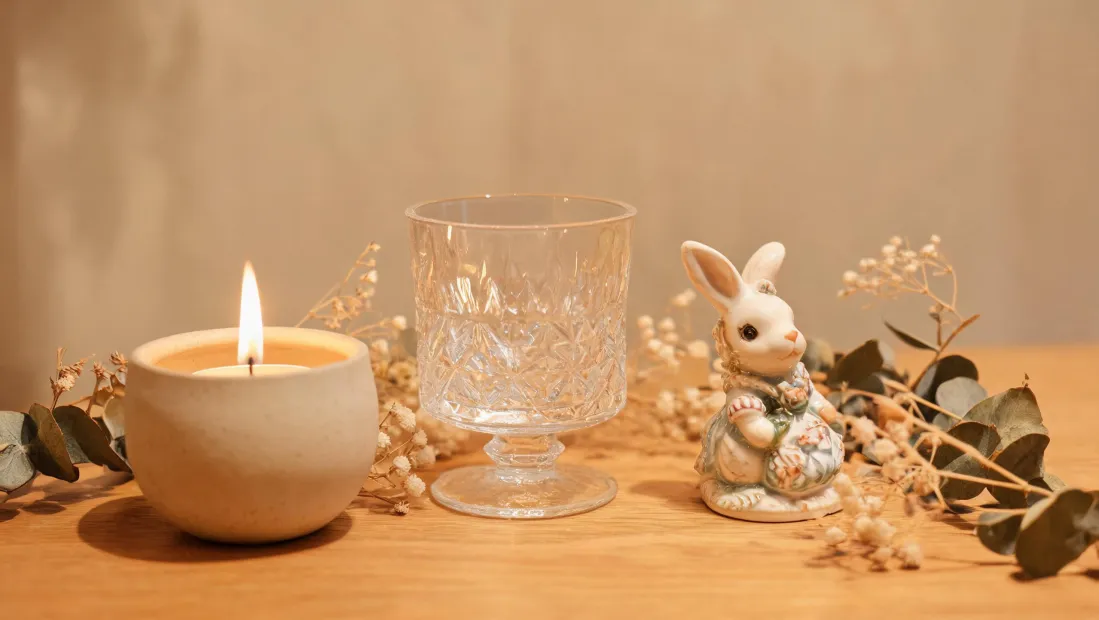
Short answer: yes, but with caveats. Anthropologie has a specific aesthetic—handmade-looking glass, organic shapes, muted colors, often with metallic accents. Many wholesale vendors (especially those supplying home decor to boutiques) offer similar items that can be customized with your logo or message.
For example, the Anthropologie ceci glass candle holder (a popular piece) has a faceted, slightly irregular shape. You can find comparable holders from Asian or European glassware manufacturers at $3–8 per unit in bulk (100+ orders). The catch: they won’t be an exact replica; the glass thickness and facet alignment vary. In my experience, clients are fine with ‘inspired by’ if the quality is noticeable—and it’s way cheaper than the $28 retail price.
Real talk: In 2023, I sourced 300 candle holders from a supplier I found on Alibaba. They looked amazing in photos. But the first batch had bubbles in the glass—visible imperfections. The vendor claimed it was ‘handmade character.’ I had to reject 60 pieces. Since then, I always request a pre-production sample (costs about $20–40). Worth it.
2. Why does everyone say ‘you get what you pay for’ with cheap promotional items?
People assume the lowest quote means the vendor is more efficient or has better automation. What they don’t see is which costs are being hidden or deferred: tooling fees, subpar packaging, skipped quality checks. I’ve seen it happen with a picture frame order—$1.20 per unit sounded great until the frames arrived with scratched acrylic and warped backs.
Here’s the truth: a cheap promotional product that looks cheap reflects badly on your brand. When a client receives a poorly finished photo frame or a clunky keychain, they subconsciously associate that with your company. The $0.50 difference per unit can cost you thousands in lost goodwill.
“When I upgraded from budget $2 picture frames to $4.50 ones (with real glass and a matte finish), internal client feedback scores on the annual gift program jumped from 3.2 to 4.1 out of 5. That’s a 28% improvement—for an extra $750 total.”
One regret I still have: not checking the CMYK conversion on the logo printing for those frames. We used Pantone 286 C (blue). The vendor’s sample was fine, but the bulk run came out purple-ish. The printed logo had a Delta E of about 7 (industry standard is <2 for brand-critical colors). I learned the hard way: always request a Pantone Color Bridge reference and ask for a test print.
3. What’s the best cheap promotional product that doesn’t feel cheap? (Hint: cutting machines aren’t the answer)
If you want something stylish and affordable, skip the cutting machines, USB drives, and tech gadgets—they scream ‘corporate swag.’ Instead, go for items that feel like home decor: soy candles in minimalist vessels, linen drawstring pouches, ceramic coasters, or marble-effect photo frames. These align with Anthropologie’s aesthetic and work for both male and female clients.
From a practical standpoint, candle sticks are a winner. A 6 oz unscented white candle in a frosted glass holder costs about $3.50–$5.50 in bulk (500+ units). Add a laser-engraved wood lid with your logo for another $1.20. Total: under $7, and it looks like something from Anthropologie.
Take this with a grain of salt: I’m not 100% sure about the current pricing because wax costs jumped in 2024 due to supply chain issues. But as of January 2025, I’ve been quoted $4.10 per unit from a reputable supplier in Vietnam, including the wood lid. Just verify shipping—the container cost added $0.90 each to my last order.
4. How do I find products that match Anthropologie’s style without the price?
Start with these sourcing strategies (I’ve tried all of them):
- Look for ‘home decor’ and ‘giftware’ suppliers at trade shows (e.g., NY Now, Atlanta Market). Many small manufacturers make pieces inspired by Anthropologie but sell at wholesale ($5–15 range). They’re often willing to customize for your order.
- Use reverse image search on Anthropologie product pages to find similar items on B2B platforms like Faire or Handshake. I found an exact match for the Anthropologie ceci glass candle holder on Faire for $6.20 (MOQ 48).
- Don’t overlook local artisans—they can do small runs (100–200 pieces) and the handcrafted look actually fits the aesthetic better than mass-produced. Yes, the per-unit cost is higher ($12–18), but you avoid import headaches and lead times are usually 3–4 weeks instead of 8–10.
5. What about picture frames? Are they worth the hassle as promotional gifts?
Picture frames are tricky. They’re personal, so the style needs to be neutral. A simple wood frame with a white mat fits most interiors. I’ve used 8x10 photo frames as corporate holiday gifts for the past 3 years. Here’s the breakdown from my last order (400 frames):
- Cost: $4.80 each (solid wood, not MDF; with real glass; 12-point mat)
- Setup fee: $35 for a custom Pantone-matched logo (we had a specific gold foil stamp)
- Shipping from China: $0.95 per unit via consolidated sea freight (took 6 weeks)
- Total landed cost: $6.10 per frame
For comparison, a similar Anthropologie frame retails for $28. The quality was surprisingly good—our VP even asked if we could buy more for her home office.
But here’s the catch: frames are fragile. About 3% of ours arrived with cracked glass. The vendor reimbursed us 2% of the order after negotiation. Lesson learned: factor in breakage (typically 2–5%) and build it into your budget.
6. Do I really need to worry about brand consistency in promotional products?
Yes, more than you think. When you give a client a product that looks like Anthropologie, they’re subconsciously comparing it to that brand’s quality. If the finish is off or the weight feels cheap, it reflects on your company—not the middleman. This is the quality perception thing: the physical object becomes a proxy for your entire service.
In 2024, our finance team wanted to save $500 by using a budget vendor for stationery sets (journals, pens, sticky notes). The journals had uneven trim, the pens skipped. We received three complaints from clients—nothing major, but it bothered me. The VP of Sales said, “If our gift looks like a dollar-store item, what does that say about our proposals?”
From my perspective, spending an extra 20–30% per unit for noticeably better materials is almost always worth it. The math: if you give out 500 gifts at $8 versus $6, the difference is $1,000. If that $1,000 prevents even one lost client (whose lifetime value is maybe $5K–10K+), it pays for itself.
7. What’s one thing no one tells you about cheap promotional products?
The hidden cost of inventory management. If you order a custom Anthropologie-inspired product and can’t use all of it, you’re stuck. I once ordered 800 candles and only needed 500 for the event. The remaining 300 sat in storage for 18 months. Eventually we donated them to a charity auction. That’s not just the product cost—it’s also the warehouse space, the labor to track them, and the lost opportunity to use that budget on something else.
A better approach: negotiate with vendors for tiered pricing with no minimum commitment for reorders. Or use a fulfillment service that keeps inventory and ships on demand. The per-unit cost might be 10–15% higher, but you avoid the dead stock. Trust me, after that candle fiasco, I changed my whole ordering process. (Should mention: we now use a 3PL that charges $1.50/month per pallet slot—much cheaper than internal storage.)
8. The question you should have asked earlier: What’s the best cheap promotional product for a diverse client base?
If I had to pick one item that works across industries, genders, and age groups, it’d be a photo frame—but not just any frame. A simple, high-quality 8x10 with a natural wood finish, true glass (not acrylic), and a white mat. It’s classic, fits Anthropologie’s aesthetic, and everyone has photos they’d like to display. Cost in bulk: $4–6. Perceived value: $20+. And you can customize the back with a laser-engraved message.
Second place: a candle stick with a minimalist vessel. More gendered than a frame? Slightly, but unscented white candles are universal. Avoid scents that risk allergies (lavender, jasmine are divisive). Stick with ‘fresh linen’ or unscented.
If you’re looking for something even cheaper (under $3), consider branded notebooks with linen covers—again, the Anthropologie vibe. A 5x7 lined notebook with 60 pages, ribbon bookmark, and foil-stamped logo can be sourced for about $2.80 in orders of 500+. They’re safe, useful, and look intentional.
Final Thoughts (Sort Of)
This is the kind of stuff I wish someone had told me 4 years ago when I took over purchasing. You don’t need to spend Anthropologie retail prices to get that look—but you do need to invest in quality control, samples, and honest vendor relationships. Every time I think I’ve cut a corner, it comes back to bite me. So take it from someone who’s made nearly every mistake: the cheapest option almost never is in the long run. But with a little research and a few samples, you can nail that Anthropologie-inspired corporate gift without breaking the bank.

Elise Laurent
Elise Laurent is a crystal and decorative glass quality analyst covering crystal figurines, vases, ornaments, suncatchers, and gift glassware. She examines ISO 6486-1 where food-contact glass dinnerware applies, then uses polarized strain inspection, dimensional checks, surface-defect grading, and refractive clarity to compare decorative pieces outside that scope. Her work helps sourcing teams choose materials, finishing routes, and protective packaging without confusing visual brilliance with verified durability.