Anthropologie Amelia Candle Holder, Ruthie Vase & Corporate Gifts: A Quality Inspector's Decision Guide
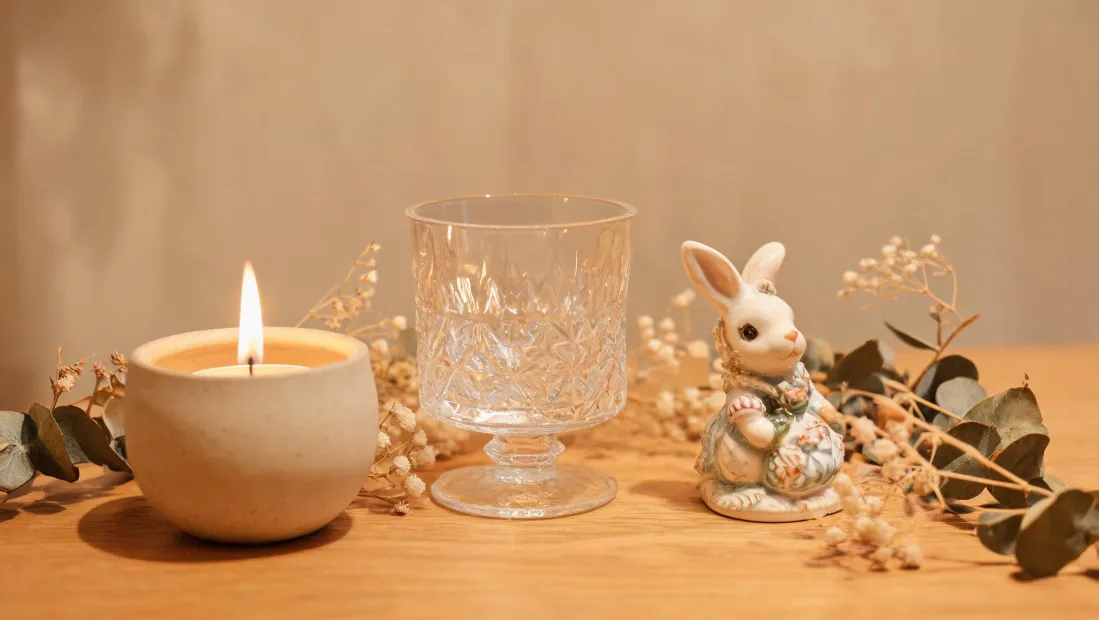
Every week, someone asks me a version of: "Is the Anthropologie Amelia candle holder worth ordering as a corporate gift?" or "Can we put our logo on 150 Ruthie Vases?" and my favorite: "Can you dishwasher bone china?" As of January 2025, I've been a quality and brand compliance manager at a gift company for four years. I review every deliverable before it reaches customers—roughly 200+ unique pieces a year. I've rejected 6% of first deliveries in 2024 for off-spec details: matte glaze on a piece that should've been glossy, a personalized engraving shifted by 2mm, and a "waterproof" vase that leaked at the base. I do not approve products based on "maybe."
Here's the thing: there is no single right answer. Not for bone china, and not for choosing between the Anthropologie Amelia candle holder and a plain ceramic option. It depends on what the gift needs to do, how many you're ordering, and who's receiving it. I'll walk you through the three scenarios I see most often.
Scenario 1: A high-touch executive gift (5–50 units)
When a client wants a handful of meaningful gifts for execs or top customers, uniqueness is the point. The Anthropologie Amelia candle holder is a great example: it's hand-finished, so each piece has slight variations in texture and tone. That's not a defect. It's what makes it feel like a gift, not a promotional item.
But "hand-finished" doesn't mean "no inspection." I inspect every single unit in small batches. For a Anthropologie Ruthie Vase, I check for cracks, chips, and glaze flaws that could cause leaks. For a candle holder, I check that the base is stable and there are no sharp edges. If you're adding a personalized gift—a name, a date, a short message—order one sample first. I went back and forth on a project once: the client wanted 24 candle holders with individual initials. The sample looked beautiful. The first production batch? The engraving was 2mm off-center. Not terrible. Not what we approved. We rejected it and required a redo. That cost us 11 days. A 48-hour sample approval would've caught the issue before we authorized the run.
For small-batch premium gifts, acceptance criteria should allow normal handcraft variation, but not structural defects. Tell the supplier in writing what "acceptable variation" means. Prevent the redo.
Scenario 2: Corporate branded merchandise at scale (100+ units)
When quantities go up, consistency beats personality. I've learned this after enough orders. At scale, the product isn't a vessel or a candle holder—it's your brand as delivered to 150 people. If one piece has a slightly different glaze, someone will notice. Probably not everyone, but the 10% who do won't forget.
For corporate gift orders, I set three non-negotiables:
- Specified color standard. If your branding includes a signature color, give the supplier a Pantone reference. Industry standard color tolerance for brand-critical colors is Delta E < 2. Delta E of 2–4 is noticeable to trained observers; above 4 is visible to most people. Reference: Pantone Color Matching System guidelines.
- Print resolution for printed items. If the gift includes a card, label, or box, ask for files at 300 DPI at final size. A 3000 x 2000 pixel image prints no larger than 10 x 6.67 inches at 300 DPI. Anything less will look soft.
- Approved production sample. Not a digital mock-up. A physical sample from the actual production run. This is the cheapest insurance you'll ever buy.
I ran a blind test with an internal team a few years ago: same ceramic mug, same logo, two suppliers. One had a slightly richer color; the other matched our Pantone reference. 78% of the team picked the Pantone-matched one as "more professional" without knowing why. The cost difference was $1.80 per piece. On a 500-unit order, that's $900 for a measurably better perception. That's the prevention-over-cure argument: spending a little time and sample expense upfront saves a much bigger fix later.
Scenario 3: The dishwasher question and bone china gifts
Now: can you dishwasher bone china? The honest answer is: often, but not always. Bone china is fired at high temperature and can be durable. The bigger risk is the decoration, not the body. Plain, underglaze pieces are usually fine in a dishwasher on a gentle cycle. Pieces with gold or platinum trim, or hand-painted overglaze, are not—dishwasher detergent will gradually damage them. Even if a piece says "dishwasher safe," that doesn't mean the pattern will look the same after 500 cycles.
So if you're choosing bone china for a corporate gift that will actually be used at the recipient's desk or kitchen, prevention is simple: test it. I once compared two "dishwasher safe" bone china mugs side by side. Twenty wash cycles later, one had developed crazing—tiny cracks in the glaze. The other was fine. We didn't need a lab report; we needed a $40 dishwasher test. That's all it took.
If your gift set includes a bone china mug, add a care card. Not because the recipient is careless, but because nobody should have to guess whether something is dishwasher safe. A care card is cheaper than a broken relationship with a key client. (mental note: I should make a standard care card template and stop retyping this on every product brief.)
And if the gift is primarily decorative, like the Amelia candle holder or a Ruthie Vase, the dishwasher question is less relevant. These are pieces people style on a shelf, not load into a machine. So don't let "can you dishwasher bone china" drive your decision if the product is decorative. That's the wrong question.
Which scenario are you in?
Here's how to decide, in four questions:
- How many units are you ordering? Under 50, prioritize beauty and inspect individually. Over 100, prioritize consistency and inspect by sample.
- Will the gift be used daily or displayed? Daily-use items need to survive real life, including dishwashers. Decorative pieces need to survive visual inspection only.
- Are you personalizing anything? If yes, order one sample and measure it. Type, size, spelling, placement. Verify all of them.
- What is your accept/reject tolerance? Put it in writing. Handcrafted variation? Allowed, within X. Color shift? Pantone Delta E < 2. Crazing? Zero. If you don't define it, you can't reject it.
I've lost a few nights of sleep to decisions that could've been solved by one sample and a conversation. It took me about four years and 800 product reviews to understand that "quality" isn't one attribute—it's a set of tradeoffs. For high-touch gifts, the right answer is variation. For branded merch at scale, the right answer is consistency. For bone china, the right answer is "test before you trust."
Five minutes of verification beats five days of correction. I've got the redo costs to prove it.

Elise Laurent
Elise Laurent is a crystal and decorative glass quality analyst covering crystal figurines, vases, ornaments, suncatchers, and gift glassware. She examines ISO 6486-1 where food-contact glass dinnerware applies, then uses polarized strain inspection, dimensional checks, surface-defect grading, and refractive clarity to compare decorative pieces outside that scope. Her work helps sourcing teams choose materials, finishing routes, and protective packaging without confusing visual brilliance with verified durability.