Does Anyone Buy Fine China Anymore? A Procurement Manager's TCO Answer
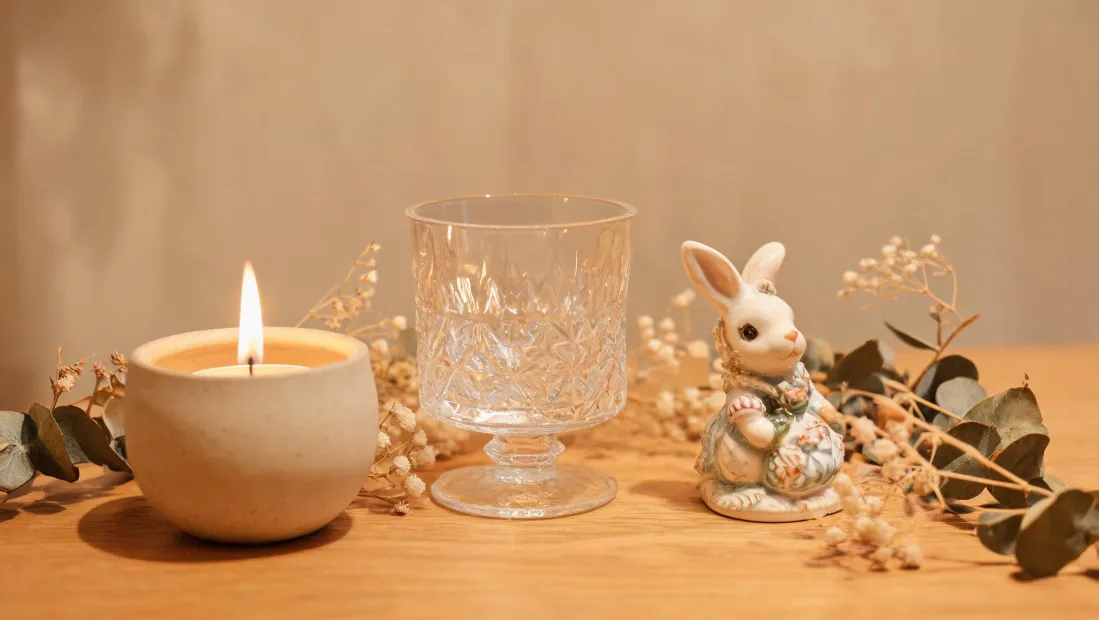
I'll say it plainly: Fine china is not dead. It's just no longer for the dining room only—it's for the client gift budget. As a procurement manager, I've spent the last six years tracking every corporate order in our cost system, and I can tell you that the more "impractical" a gift feels, the better it performs. The Anthropologie Christmas Collection, a glass flower trinket dish, a good candle—these are not line items I hesitate over. They're the ones I defend at budget reviews.
This is not nostalgia. It's total cost of ownership thinking. The cheapest product on the shelf is often the most expensive one after you add the time, the shipping, the breakage, and the awkward moment when the client opens a box that feels anonymous. I didn't always think this way. Five years ago, I would have chosen a branded mug over a glass trinket dish.
Then I tracked the 2021 gift spend in our procurement system. The utility gifts—notebooks, pens, logo chargers—were not making it into people's homes. Some of them weren't even making it out of the office supply closet. The design-led gifts, on the other hand, were getting photographed, posted, and mentioned in follow-up calls. I can't tie a dollar sign to that with precision. But the pattern is clear enough that I changed our gift strategy anyway.
Why design-led gifts win on TCO
TCO, or total cost of ownership, is usually thrown around in procurement conversations about software and machinery. It applies to gifts too. The cost of a gift is not the invoice price. It's the invoice price plus the time to choose it, the freight to move it, the packaging to keep it intact, the risk of it breaking, and the value of whether the recipient actually keeps it.
A $30 branded mug that spends its life in a cabinet has a higher cost per impression than a $50 object that sits on a dresser for years. The mug was cheaper. The dish was more economical. I realize that sounds like consultant wordplay, but our order history shows the same pattern year after year.
Last year, when a client asked what our gift budget could do, I started with the Anthropologie glass flower trinket dish. Not because it was the most practical piece. Because it was the most likely to stay out on a desk, which meant the client would think of us every time they saw it. That's the entire point of a corporate gift.
What "does anyone buy fine china anymore" actually means
I hear the question "does anyone buy fine china anymore?" a lot. Usually from a VP who just read a trend piece about small apartments and casual entertaining.
My answer: formal china is a slow category, but dinnerware is not. We've ordered more mix-and-match dinnerware sets from Anthropologie-inspired suppliers in the last two years than in the previous four combined. Those dishes are not going into a locked cabinet for Thanksgiving. They're getting used every day, and that everyday use is what gives the gift staying power.
Don't hold me to this, but for 2024 our average gift cost was around $42 per unit, including personalization. That's not cheap and it's not premium—it's the sweet spot where perceived value jumps. Home fragrance sits in the same range. A candle, a bud vase, a small dish: these are not essentials. But the best corporate gifts rarely are essentials. They're small luxuries that make a client feel more like a partner and less like an account number.
The Anthropologie Christmas Collection as a gifting benchmark
The Anthropologie Christmas Collection is a useful benchmark. It includes candles, ornaments, tabletop pieces, and decorative objects that are designed to be lived with, not stored. The glass flower trinket dish is a good example of that shift. It's technically a trinket, but in gifting, the trinkets are often the products that outperform the practical ones.
I want to be clear about something: I'm not affiliated with Anthropologie, and we don't sell the brand. But the brand's design language has changed how corporate buyers think about gifts. When a client searches for "anthropologie glass flower trinket dish" or "anthropologie christmas collection," they're not looking for formal china. They're looking for an aesthetic that feels personal, warm, and elevated. That expectation is now part of the procurement landscape.
Home fragrance is another example. A candle from that aesthetic—whether it's from Anthropologie or a local maker with the same sensibility—has a longer life in the recipient's home than most branded swag. The scent fades, but the container often stays. That's an impression you paid for once and get repeatedly.
The hidden cost of the "cheaper" option
Now let me tell you about the time I chased a low price and lost money.
When we didn't have a formal approval chain for "lower-cost alternative" substitutions, we approved a $16 knockoff dish set for a client holiday order. The first problem was a three-week lead time. That required express shipping. Then half the pieces arrived chipped. We had to reorder and re-ship, which cost about $1,200 in total rework. The "savings" on the base products was $340. We lost $860 on that one decision.
That was in Q4 2023, and it's now in our procurement policy: quote full TCO before substituting a design-led product for a cheaper version. I'm not saying every budget-friendly decorative item is bad. But if the cheaper item breaks, misses the deadline, or looks like it came from a vending machine, the total cost flips fast.
Total cost checklist for corporate gifts
If you're planning a 2025 corporate gift budget, here's the checklist I use:
- Base price. Include the actual product cost, but don't compare it to the cheapest mug on the market.
- Setup, personalization, and packaging. Customizing a dish or a candle often costs more than imprinting a pen. Get an all-in quote.
- Shipping and rush fees. Fragile items need better protection. Plan ahead or budget the rush.
- Replacement and breakage cost. Order 5–10% extra for breakage, or accept the risk of an incomplete gift set.
- Impression longevity. A dish on a dresser, a candle on a bookshelf, a dinnerware set in a kitchen cabinet—these generate brand warmth for months. A tote bag does not.
This pricing was accurate as of early 2025. Retail prices change every season, especially with something like the Anthropologie Christmas Collection, so verify current rates before you put numbers in a budget deck.
So, does anyone buy fine china anymore?
Yes. But it has to earn its place in a spreadsheet, not just in a china cabinet.
I do not buy fine china for romantic reasons. I buy it because a $50 gift that gets used is cheaper than a $20 gift that gets forgotten. I buy it because a glass flower trinket dish from the Anthropologie Christmas Collection—or a similar piece from an independent maker—is not just a cost. It's an investment in the kind of relationship that doesn't show up on a purchase order until the next contract cycle.
If you're a skeptic, I get it. I was the one on the procurement side rolling my eyes at "aesthetic" purchases too. Then I ran the numbers on 2023 and 2024 and realized my own bias was the biggest cost driver. I'm not 100% sure I can prove the exact ROI of a pretty dish. But I can prove the cost of buying something nobody remembers.

Elise Laurent
Elise Laurent is a crystal and decorative glass quality analyst covering crystal figurines, vases, ornaments, suncatchers, and gift glassware. She examines ISO 6486-1 where food-contact glass dinnerware applies, then uses polarized strain inspection, dimensional checks, surface-defect grading, and refractive clarity to compare decorative pieces outside that scope. Her work helps sourcing teams choose materials, finishing routes, and protective packaging without confusing visual brilliance with verified durability.