Anthropologie Gift Card Online vs. Custom Branded Gift Boxes: A Cost Controller's Honest Breakdown
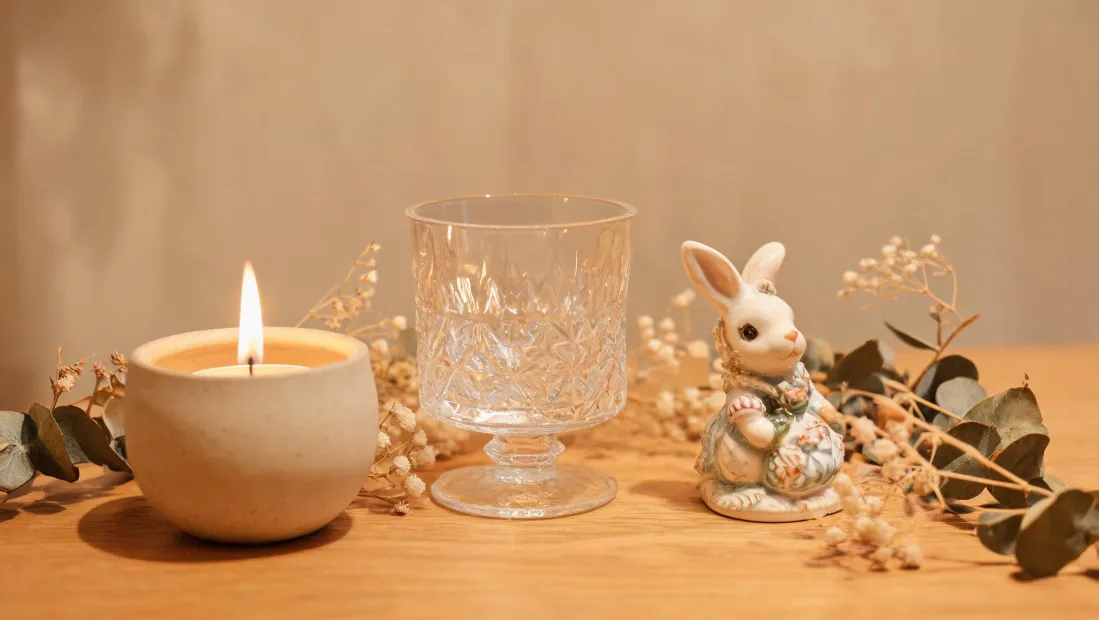
Two Ways to Say Thank You
Every quarter, someone on our team says, 'Let's just buy Anthropologie gift cards online—it's easy.' And it is. But as the procurement manager at a 40-person marketing agency, I've managed our client-appreciation budget ($24,000 annually) for six years, negotiated with 15+ vendors, and tracked every order in our cost system. 'Easy' isn't the same as 'effective.'
The two options I compare side by side: sending an Anthropologie gift card online, or building a custom branded gift box with Anthropologie-inspired home fragrance, a candle warmer lamp, and a custom ornament.
This is not a 'gift cards are lazy' rant. Gift cards have a place. But if you're a B2B buyer choosing between these two, you need more than a gut feeling.
The Comparison Framework
Here's what I compare every time:
- Total cost of ownership — not just unit price
- Perceived value — what the recipient thinks it's worth
- Brand impact — which one advances your company
- Logistics — time, shipping, and hidden work
If you're here for 'which one is cheapest,' the honest answer is: neither. Both can be wrong. Let me show you why.
Dimension 1: Total Cost of Ownership
From the outside, gift cards look cheaper because there's no inventory. The reality is you're paying full retail with zero brand carryover. Let's use 100 recipients and a $50 gift card baseline.
- Gift card route: 100 x $50 = $5,000. No setup fee, no inventory, no shipping if you email them. If you mail physical cards, add $0.73 per First-Class letter as of January 2025 (usps.com/stamps). So roughly $5,073.
- Custom box route: A candle warmer lamp at wholesale is $15, a home fragrance candle is $9, a custom ornament is $4, packaging is $2, and fulfillment is $3. That's $33 per unit. Add $6 for shipping per box = $39. Add a one-time setup cost of $1,000 for design, samples, and logo work. Total: 100 x $39 + $1,000 = $4,900.
At 100 recipients, the custom route is actually $100 cheaper. At 30 recipients, the math flips: gift cards cost $1,500, and custom boxes cost 30 x $39 + $1,000 = $2,170. The setup fee is the killer for small lists.
I wish I had tracked how many recipients actually redeemed physical gift cards. I don't have hard data on breakage, but anecdotally, at least a few cards were never used. That's not a cost issue—the money is still spent—but it is a relationship issue.
One note on the candle warmer lamp: search 'candle warmer lamp Anthropologie' and you'll see retail prices around $50–70. The wholesale version I source costs $15–18. That gap is where perceived value comes from.
Conclusion: For lists under 40, gift cards win on pure cost. For lists over 75, custom boxes are competitive or better—if you're disciplined about sourcing.
Dimension 2: Perceived Value
A $50 gift card looks like $50 of value. That's true. But the custom box has a different perceived value. A candle warmer lamp alone retails for $50+. Add a home fragrance candle and an ornament, and the recipient's mental total is easily $80–90. Your actual cost was $33. That's the leverage.
Home fragrance is the emotional anchor. Scent is one of the strongest memory triggers. For the 2023 holiday batch, we sourced a pine-scented candle from a wholesale supplier and tested it personally. The unboxing response was noticeably better than a digital certificate.
A Quick Word on DIY Pine-Scented Candle Kits
Every holiday season, someone on my team googles 'how to make a pine scented candle' and proposes a DIY kit. I've been down that path. The real cost is jars, wicks, fragrance oil, labels, glue, labor, and liability. Once you factor in your team's time, a wholesale candle with a custom label is often the more practical choice.
Conclusion: If you want the recipient to feel 'wow,' the custom box usually wins. If you want them to choose exactly what they want, the gift card wins.
Dimension 3: Brand Impact
A gift card is a billboard for Anthropologie. A custom box is a billboard for your company. Depending on the relationship, either can be right.
For a high-value client whose taste you know, an Anthropologie gift card says 'we pay attention to your preferences.' For a broader list, a custom box with your logo says 'we wanted you to remember us.'
If you put your logo on an ornament or label, print resolution matters: your logo should be 300 DPI at final size. Color matching matters too. If your brand color is a specific blue, ask your vendor for a Pantone proof. For brand-critical colors, Delta E below 2 is the industry tolerance; above 4 is visible to most people.
If you include a thank-you card in the box, paper weight matters: 80 lb cover (216 gsm) is a common premium card-stock weight. A flimsy 20 lb sheet undercuts the whole unboxing.
Conclusion: Brand recall favors the custom box. Immediate gift pleasure favors the card. The right answer depends on whether the goal is memory or joy.
Dimension 4: Logistics and Fulfillment
Here's something vendors won't tell you: the first quote is almost never the final price. I've received a $28/unit quote that became $42/unit after custom label setup, ribbon, warehouse pack-out, and oversized packaging. Ask for a line-item breakdown before you approve. My current policy requires quotes from at least three vendors for any custom order—a $450 hidden-fee lesson taught me that.
Gift cards online are absurdly easy. No inventory, no warehouse, no shipping damage. The custom route requires planning. USPS dimensions matter: a letter is 3.5-inch x 5-inch to 6.125-inch x 11.5-inch, and a large envelope can be up to 12-inch x 15-inch (USPS Business Mail 101). A candle warmer lamp is not going to fit in either, so factor real package rates into your TCO.
For our 2024 Q4 order, shipping quotes varied by $2.80 per box between two vendors for the same size and weight. That's $280 on 100 boxes. The 'free shipping' offer was baked into a higher per-unit price. Freight isn't free; it's just buried.
Conclusion: Gift cards win on speed. Custom boxes can win on memorability—but only after you've validated the total landed cost.
Dimension 5: Claims and Compliance
If your custom box calls the packaging 'recyclable' or 'eco-friendly,' the FTC Green Guides require substantiation (16 CFR Part 260). A vendor saying 'it's fine' is not enough. If you say your candle is 'premium,' make sure that's not an unsubstantiated advertising claim. Gift cards sidestep all of this.
Conclusion: More product steps mean more legal review. That's a cost, too.
So Which One Should You Choose?
No universal answer. Here's how I decide:
- Choose Anthropologie gift cards online when you're buying for fewer than 40 people, the recipients are remote, you don't know their taste, or your timeline is under one week.
- Choose custom boxes when you want your brand remembered, you have 75+ recipients, you have at least four weeks of lead time, and you've verified the all-in cost with a trustworthy vendor.
If you're in the middle—40 to 75 people—the tie-breaker is relationship intent. For closer relationships, the custom box often justifies the extra cost. For transactional relationships, the gift card is the safer, simpler bet.
I also want to be honest about what I'm not saying. Custom boxes are not for everyone. If you can't manage a pack-out, if you don't have a tested vendor, or if nobody owns the logistics, a gift card is the right call. Sometimes the best procurement decision is the one that doesn't create a project.
Never expected the 'nicer' option to be cheaper at 100 units. It was. That's why I run the numbers instead of trusting my gut. Pricing above is accurate as of January 2025, and shipping rates change, so verify before you budget. I still buy gift cards. I just do it after comparing.

Elise Laurent
Elise Laurent is a crystal and decorative glass quality analyst covering crystal figurines, vases, ornaments, suncatchers, and gift glassware. She examines ISO 6486-1 where food-contact glass dinnerware applies, then uses polarized strain inspection, dimensional checks, surface-defect grading, and refractive clarity to compare decorative pieces outside that scope. Her work helps sourcing teams choose materials, finishing routes, and protective packaging without confusing visual brilliance with verified durability.