Quality Isn't Perfection: My Honest Take on Anthropologie-Inspired Corporate Gifts
-
Does Target Sell Anthropologie Gift Cards? Here's Why That's the Wrong Question
-
Scented Candles: Where Quality Actually Lives
-
What Anthropologie Christmas Houses Taught Me About Specs
-
The Cutting Machine Trap (and the Instagram Home Decor Myth)
-
But Isn't Custom More Expensive?
-
So, What Does Quality Actually Mean?
I don't think quality is about being perfect. I think it's about knowing exactly what you're approving.
I'm a quality and brand compliance manager at a corporate gift company that designs Anthropologie-inspired products. We don't sell Anthropologie merchandise. We make giftable versions of the same visual language—muted colors, vintage textures, charming imperfections—for B2B clients who need branded candle sets, holiday decor, and stationery.
I review roughly 200 unique items a year. Actually, closer to 180, I'd have to check the system. In 2024, I rejected 18% of first deliveries, mostly for color mismatch and inconsistent branding. That number sounds high, but here's the thing: catching a problem before a client sees it is the whole job.
Does Target Sell Anthropologie Gift Cards? Here's Why That's the Wrong Question
Every fall, a client asks: Does Target sell Anthropologie gift cards? Honestly, I've never fully understood why this comes up. My best guess is that Target has a similar elevated-budget vibe, so people assume the gift cards are interchangeable. As of January 2025, Target does not sell Anthropologie gift cards. You'd buy those directly from Anthropologie or URBN brands.
But if you're a corporate buyer, that question points in the wrong direction. You don't need an Anthropologie gift card. You need the feeling of an Anthropologie gift without the trademark headache and the markup. A custom-branded card in an Anthropologie-inspired package can do more for your company than a generic store card ever would.
Scented Candles: Where Quality Actually Lives
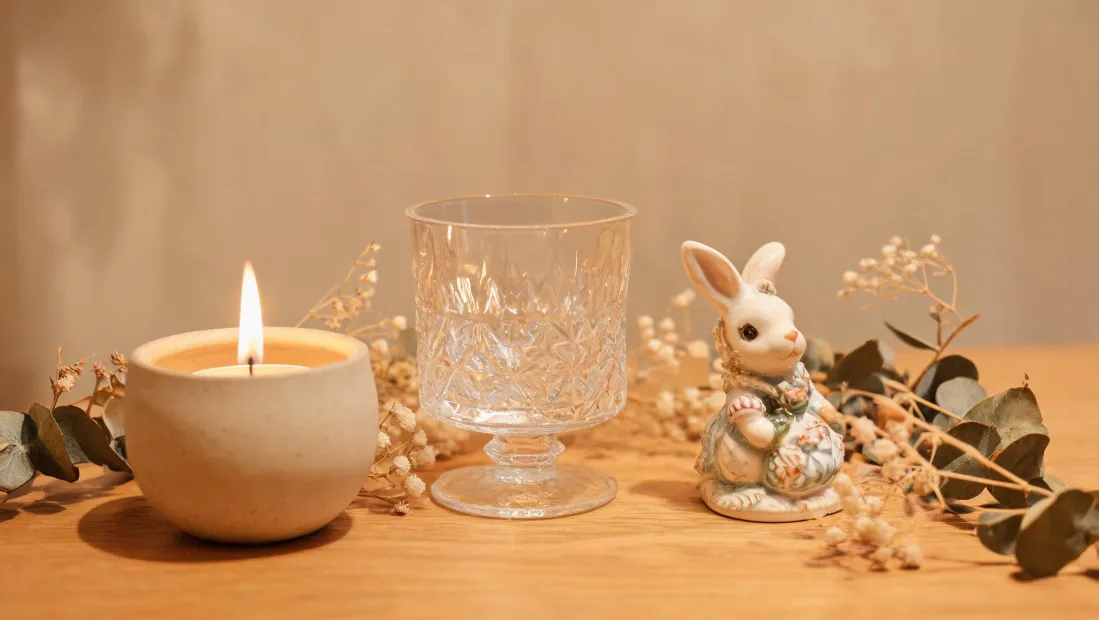
Our most ordered corporate item is a scented candle. It looks simple: pick a scent, pick a jar, print a label, ship. If you've ever approved a custom candle, you know it's not that easy. In my first year, I made the classic beginner error: I approved a sample because the scent was right and ignored the label alignment. 1,000 candles later, the logo was visibly crooked. That cost us a $2,300 reprint and a very annoyed client.
Now every scented candle spec sheet includes wax color reference, fragrance concentration, label position with a tolerance of 1mm, and burn test results. That last one is the one people forget. A candle can look perfect and burn unevenly, which is worse for your brand than a slightly off label.
This isn't me being a perfectionist. It's me being efficient. Switching to a clearer approval process cut our quote-to-approval turnaround from five days to two. The automated spec sheet we built in 2022 eliminated the data-entry errors we used to have.
What Anthropologie Christmas Houses Taught Me About Specs
Anthropologie Christmas houses are a recurring request around Q3. Those little ceramic houses with painted chimneys and lit windows are kinda fragile, and they're harder to reproduce than people think.
In 2022, I added one line to our contract: exposed ceramic edge must be smooth. The vendor almost pushed back. That one line saved us from a $22,000 redo when a batch of 8,000 houses came in with rough edges.
I also learned to trust my gut that year. The numbers said go with a budget vendor for a large order—15% cheaper, same material spec. My gut said their sample's paint line was thinner than our approved sample. I went with my gut and asked for a revised sample. Later, that vendor's work started flaking on another project. Not our project, thank goodness.
The Cutting Machine Trap (and the Instagram Home Decor Myth)
I get inquiries from people who read 'how to make money from home decor instagram' and assume a cutting machine is the path. I don't want to dismiss that route. A cutting machine is a great prototyping tool. We use one for mockups, sample labels, and test shapes.
But a cutting machine is not a manufacturing strategy. If you're making 50 handmade ornaments, it's perfect. If you're fulfilling a 1,000-unit corporate order with consistent branding, the math falls apart. The edges vary, the material options shrink, and you end up paying labor to babysit a machine that should be a design tool, not a factory.
This is where efficiency and quality meet. The efficient process is not always the cheapest machine. It's the process that scales without losing control.
But Isn't Custom More Expensive?
The most common pushback I hear is that custom Anthropologie-inspired items cost more than buying a gift card or a mass-produced candle. Maybe upfront.
But a misplaced logo, a flaking paint line, or a broken Christmas house costs a lot more. A spec sheet and a signed sample take about an hour—maybe $150 in internal time. A reprint of 500 branded labels costs $1,800 plus freight plus the client's trust. I've done that math more times than I'd like.
We don't claim to be the cheapest supplier. I'd never say that. We promise something better: we can define what good looks like before we spend money on it.
So, What Does Quality Actually Mean?
So I'll say it again: quality isn't perfection. It's knowing exactly what you're approving. The more precise your specs, the fewer surprises. The fewer surprises, the faster the process. And in B2B gifting, speed and consistency matter more than making every item look artisanal in an unchecked way.
I do not mean you should skip aesthetics. I mean you should specify them. That's been my experience with Anthropologie-inspired gifts, scented candles, and those tiny ceramic houses. At least, that's been my experience on the corporate side.
I don't have a perfect record. I've approved too many samples in a hurry, and I've paid for it. But I've never been fired for asking for a revised sample. I have been burned by approving one too fast. That's why I keep saying: quality is clarity, and clarity is efficiency.

Elise Laurent
Elise Laurent is a crystal and decorative glass quality analyst covering crystal figurines, vases, ornaments, suncatchers, and gift glassware. She examines ISO 6486-1 where food-contact glass dinnerware applies, then uses polarized strain inspection, dimensional checks, surface-defect grading, and refractive clarity to compare decorative pieces outside that scope. Her work helps sourcing teams choose materials, finishing routes, and protective packaging without confusing visual brilliance with verified durability.