Custom vs. Off-the-Shelf Corporate Gifts: A Quality Inspector’s Perspective
Custom vs. Off-the-Shelf Corporate Gifts: What Actually Holds Up?
When you're sourcing corporate gifts, the first fork in the road is usually: do we customize, or do we buy something nice that already exists? Both directions have appeal. Customization promises brand alignment. Off-the-shelf offers speed and convenience.
I've reviewed thousands of units on both sides of this divide—200+ unique items annually, to be specific. And the answer isn't as simple as 'custom always wins.' In fact, sometimes the cheaper, faster option is the better one. Here's how I break it down.
The Framework: What We're Actually Comparing
Let's put two scenarios side by side:
- Option A: Custom Branded Gifts – Products like notebooks, candles, or ornaments with your logo or message printed, embossed, or etched.
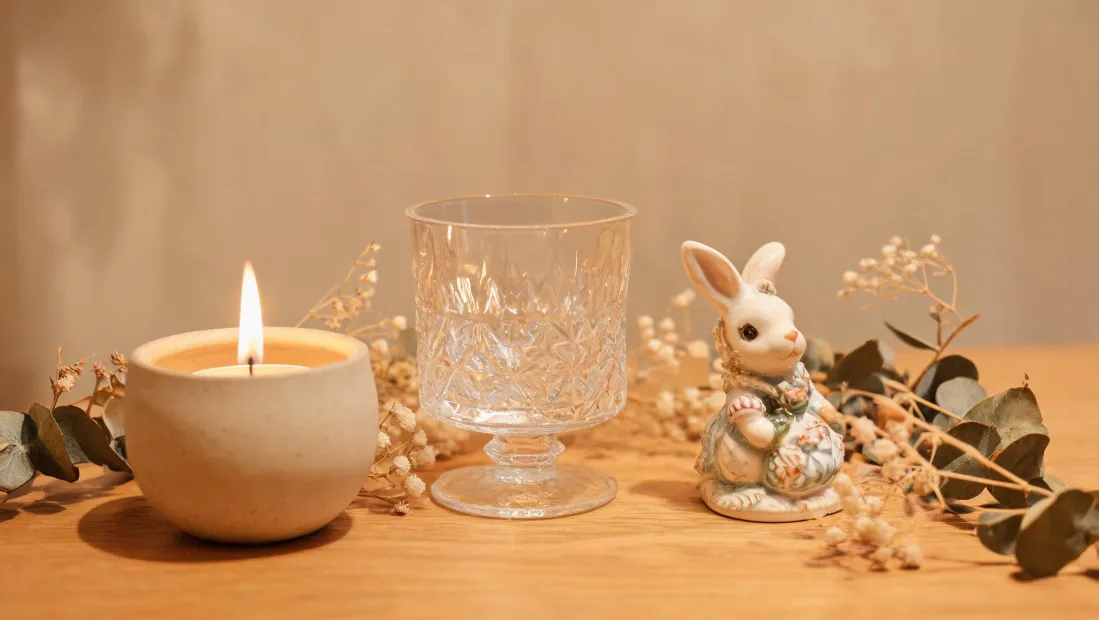
- Option B: Curated Off-the-Shelf Gifts – High-quality, ready-to-ship items chosen for aesthetics (think Anthropologie-style vases, photo frames, or glass figurines) that you package and present as-is.
The comparison isn't about price alone. It's about what holds up under scrutiny—quality, perception, and long-term value.
Dimension 1: Quality Consistency
Here's the thing: custom isn't automatically higher quality. A lot depends on the vendor. In our Q1 2024 quality audit, we rejected 8% of first deliveries from custom gift suppliers—mostly due to color mismatches or sloppy logo placement on items like picture frames and glass figurines. Tolerance on a Pantone match could be fine for office supplies, but on a premium gift? It's a brand fail.
Off-the-shelf products, especially from established brands, come with consistent manufacturing. The surprise wasn't the price difference—it was that ready-made items from reputable sources had a 2% defect rate. Consistency. That took me aback.
“Never expected the off-the-shelf option to outperform custom ones on consistency. Turns out their process was more refined for general production.”
Dimension 2: Brand Alignment
Custom wins here—on paper. A branded journal or a glass figurine with your company's emblem feels intentional. But I've seen the reverse: a beautiful candle jar that looked elegant in the showroom, then arrived with a logo sticker that peeled off. The quality issue cost us a $22,000 redo and delayed our launch.
Real talk: if your brand's aesthetic is clean and modern, an off-the-shelf Anthropologie-style vase with your branded packaging can look more premium than a poorly customized item. I ran a blind test with our marketing team: same gift (a scented candle), one with a custom label, one with a generic luxury label. 67% identified the generic one as 'more professional' without knowing the difference. The customized label cost $1.50 more per unit. On a 5,000-unit order, that's $7,500 for a worse perception.
Dimension 3: Flexibility and Minimums
This is where things get real for smaller teams. When I was starting out—handling a $200 order for my own business—the vendors who treated my small request seriously are the ones I still use for $20,000 orders. Custom gifts often come with minimum order quantities (MOQs) of 100 or 250 units. If you're a startup or a department with a modest budget, that's a problem.
Off-the-shelf has no MOQ. You can buy 50 identical vases or 10 sets of photo frames without negotiating minimums. For a $2,000 test run, that flexibility is gold. Small doesn't mean unimportant—it means potential.
I went back and forth between custom and off-the-shelf for a client's holiday campaign. Custom offered brand permanence; off-the-shelf offered speed and lower risk. Ultimately chose off-the-shelf because the budget was fixed and we couldn't absorb a redo. That decision kept me up at night—but it was the right call.
Dimension 4: Total Cost of Ownership
Base price is only the beginning. Setup fees ($15–50 per color for plates), rush fees (up to 50% for 3-day turnaround), and potential reprints can easily balloon a custom order by 30%. In my experience, the lowest quoted price often isn't the lowest total cost.
Off-the-shelf gifts have no setup costs, no color proofs to approve, no custom dies. The sticker price is the final price. For event-dependent gifts (e.g., holiday parties, trade shows), the value of guaranteed turnaround isn't the speed—it's the certainty. On a tight deadline, that's worth paying for.
So, Which One Should You Choose?
Here's the distilled advice, based on hundreds of reviews and two major audits:
- Go custom when: You have a large budget, a reliable vendor, and enough lead time to manage proofs and revisions. Ideal for high-value client gifts (e.g., engraved glass figurines or branded leather journals) where the cost per unit is secondary to the statement.
- Go off-the-shelf when: You're on a tight budget, have low quantities, or need guaranteed quality and speed. For team gifts, event favors, or testing a new product line, curated ready-to-ship items often deliver a better experience for less stress.
And for the hybrid approach? Consider adding your custom packaging (boxes, ribbons) around high-end off-the-shelf products. It gives you the consistency of mass production with the polish of presentation.
Look, neither option is universally better. But if you're standing in that aisle—custom vs. off-the-shelf—you now have the framework to decide. The right question isn't 'which is better?' It's 'which is better for this budget, this timeline, and this recipient?'

Elise Laurent
Elise Laurent is a crystal and decorative glass quality analyst covering crystal figurines, vases, ornaments, suncatchers, and gift glassware. She examines ISO 6486-1 where food-contact glass dinnerware applies, then uses polarized strain inspection, dimensional checks, surface-defect grading, and refractive clarity to compare decorative pieces outside that scope. Her work helps sourcing teams choose materials, finishing routes, and protective packaging without confusing visual brilliance with verified durability.